Oleh Mahdzir Ibrahim
Secara formalnya, Dasar Ekonomi Baru (DEB) yang diperkenalkan pada
1970 sudah tiada selepas tahun 1990, ketika itu Tun Mahathir Mohamad
menjadi Perdana Menteri.
DEB digantikan dengan Dasar Pembangunan Nasional dan kemudian,
Perdana Menteri Datuk Seri Najib Tun Razak menukarnya sekali lagi
setelah BN hilang majoriti dua pertiga di Parlimen pada PRU ke 12,
menjadi Model Ekonomi Baru (MEB) pada tahun 2010.
Malah dizaman Najib juga, MEB disertai dengan Program Transformasi
Ekonomi atau Economic Transformation Programe (ETP). Intipati kepada
ketiga-tiga dasar ini tetap sama sungguhpun namanya berbeza.
Saya pernah bertanyakan perkara ini dengan rakan-rakan dari kaum
Cina. Adakah mereka merasa tidak selesa dengan DEB atau DPN atau MED.
Jawabnya secara umum, tidak.
Mereka sama sekali tidak merasa risau atau bimbang atau terganggu
dengan agenda DEB, DPN atau MEB kerana beliau mengakui bahawa dasar
tersebut punya sebab yang boleh diterima.
Realiti bahawa majoriti penduduk Malaysia, lebih dari enam puluh
peratus adalah kaum Bumiputera (lebih lima puluh peratus adalah Melayu)
dan kaum majoriti inilah yang paling diancam kemiskinan.
Justeru katanya, kaum Cina atau India juga, tidak pun merasa cemburu
atau merasa terancam, malah mereka boleh memahami dan menerimanya.
Namun, jelasnya lagi bukan niat atau objektif dasar-dasar ini yang
dipertikaikan, tetapi bagaimana dasar ini dilaksana. Inilah juga yang
disepakati oleh ramai rakan-rakan Melayu yang lain.
Rekod lampau
Ratusan billion ringgit telah dibelanjakan sejak Rancangan Malaysia
kedua (1970an) untuk melaksanakan semua dasar-dasar kerajaan ini.
Namun, bukan sahaja objektifnya gagal dicapai malah jika ‘Melayu
masih ingat’, ada direkodkan berlakunya pelbagai skandal penyelewengan
dalam kerajaan.
Ini boleh dilihat sejak dari zaman penswastaan Tun Mahathir (kes
MAS/Tajudin Ramli dan krisis ekonomi 1997), zaman Tun Abdullah Ahmad
Badawi (Laporan Audit Negara seperti kerugian yang ditanggung kerajaan
akibat kelemahan mengurus dalam projek keretapi berkembar Ipoh-Rawang)
hinggalah ke zaman Najib (kes pembelian kapal selam, peralatan tentera
dan kes NFC).
Jika ‘melayu masih ingat’, pada tahun 2011, Global Financial
Integrity melaporkan, sekitar RM888 billion wang haram mengalir keluar
negara dari tahun 2000 hingga 2008.
Ini belum termasuk laporan Ketua Audit Negara tentang pelbagai lagi
ketirisan akibat kecuaian pihak kerajaan, baik diperingkat kementerian,
jabatan dan agensi-agensi kerajaan dalam pelbagai projek yang lain. Ini
pun jika ‘Melayu masih ingat’.
Siri pendedahan dalam Laporan Audit Negara setiap tahun masih gagal
membuahkan tindakan drastik oleh kerajaan dalam menangani rasuah dan
ketirisan dalam pengurusan kerajaan.
Juga, tidak ada banyak tindakan konkrit yang diambil oleh pihak
berkuasa, sebaliknya masih banyak kes dan pendakwaan yang berkaitan
rasuah masih tertangguh.
Peruntukan untuk Suruhanjaya Pencegahan Rasuah Malaysia (SPRM) terus
meningkat dalam bajet setiap tahun, tetapi indeks persepsi rasuah oleh
CPI Transparency International (TI), telah meletakan Malaysia ditangga
ke 60 pada 2011 yang mendapat peruntukan sebanyak RM203 juta berbanding
RM29 juta pada tahun 1996 ditangga ke 26.
Semuanya senario ini bermula dengan dasar pelaksanaannya.
Apa jaminannya?
Ini memberi indikasi bahawa apa jua dasar dengan apa pun namanya, apa
jua slogan yang indah-indah untuk apa jua tujuannya, tidak dapat
menjamin tahap integriti dan akauntabiliti yang tinggi dalam aspek
pengurusan dan pelaksanaannya.
Transformasi dalam agenda sahaja tidak memadai sebaliknya Malaysia memerlukan reformasi sistem.
Kelmarin, Najib telah mengumumkan langkah untuk memperkasa ekonomi
Bumiputera dalam bentuk dana dan latihan yang akan disalur dan digerakan
menerusi pelbagai agensi seperti TEKUN, IKBN, JPA, MARA, UiTM, Yayasan
Wakaf Malaysia dan banyak lagi, yang menelan belanja ratusan juta
ringgit.
Agenda Memperkasa Ekonomi Bumiputera ini dilaksana dalam suasana
budaya rasuah, sikap cuai dan kronisme yang masih berleluasa, khususnya
bagi mereka yang berkepentingan.
Ingin kita tegaskan lagi, apa pun dasar dan matlamatnya, rakyat tidak
menolaknya secara membuta tuli. Persoalannya mudah, apakah ada jaminan
dari PM bahawa kesemua dana-dana yang akan disalurkan ini akan selamat
sampai ke kelompok sasaran tanpa berulangnya lagi hal ketirisan dan
rasuah?
Dan, adakah jaminan bahawa kumpulan sasaran untuk mendapat latihan tambahan itu benar-benar dari golongan yang memerlukan?
Jika melihat dari reputasi kerajaan BN selama ini, pastinya kita
merasa bimbang dan ragu. Lihat saja institusi seperti Universiti
Teknologi Mara (UiTM), dahulunya ditubuhkan fokus untuk membantu
bumiputera luar bandar yang miskin, tetapi kini praktiknya seakan telah
berubah.
Maka, jalan paling berkesan untuk ‘memperkasa’ ekonomi Bumiputera
ialah dengan ‘memperkasa’ aspek ketelusan (transparency), undang-undang
dan integriti demi memastikan budaya rasuah dan ketirisan dapat
diperangi habis-habisan.
Masalah ketirisan dan rasuah bukan sekadar mengurus persepsi dengan
slogan atau kata-kata indah tetapi ia perlu dilaksana dan dikuatkuasa
dengan segera. Tidak sukar, hanya memerlukan keberanian dan kesungguhan.
“Apa guna pasang pelita, jika tidak dengan sumbunya. Apa guna bermain kata, kalau tidak dengan sungguhnya.”
Penulis ialah peminat seni dan kebudayaan serta Ahli Jawatankuasa Eksekutif Pusat, Pemuda Sosialis DAP.
Sunday, September 15, 2013


Higher Perspective: Former Presidents Warn About the “Invisible Govern...
Higher Perspective: Former Presidents Warn About the “Invisible Govern...: Ross Pittman, Guest Waking Times “ Those who do not learn from history are doomed to repeat it. ”- George Santayana Past presidents o...
Saturday, September 14, 2013
Apabila artikel ‘Kenaikan Harga Barang Ketetapan Allah’
muncul di saat rakyat sedang merasai ancaman kenaikan harga barang
akibat potongan subsidi minyak oleh pihak kerajaan, majoriti rakyat
memang tidak puas hati. Saya tidak tahu, apakah hasrat sebenar penulis
berkenaan. Mungkin niatnya hendak meredakan perasaan rakyat terhadap
kerajaan ataupun meredhakan kerajaan terhadapnya, itu tidak pasti. Kata
penulis, dia bercakap dalam konteks sabar. Mungkin itu maksudnya.
Menariknya saya terbaca satu komen yang menyebut: ‘Kalau begitu pegawai-pegawai penguatkuasa kawalan harga barang sedang menentang ketetapan Allah lah?!’ Ringkas, tapi penuh makna.

Nabi s.a.w mengajar kita tentang takdir dan usaha dalam masa yang sama. Apabila manusia berusaha, namun gagal disebabkan aturan perjalanan alam yang membabit pelbagai pihak; iklim, manusia, masa dan lain-lain, maka manusia hendaklah akur dengan kehendak Allah dalam hal itu. Segala yang berlaku dalam alam ini dengan izin Allah. Tiada apapun yang boleh berlaku tanpa izinNYA. Namun, apa yang DIA izinkan, bukan semestinya DIA redha. Demikian, apa yang DIA redha bukan semestinya DIA izinkan. DIA tidak redha kezaliman Firaun, tetapi DIA mengizinkan kewujudan Firaun atas sistem alam yang diciptaNYA. DIA redha hamba-hambaNYA bersedekah, tapi bukan semua mereka DIA izinkan memiliki harta yang banyak, atas sistem alam ciptaanNYA. Maka, di situlah adanya pahala bagi niat yang baik. Maka, DIA juga menetapkan Hari Pembalasan selepas kematian untuk membalas kebaikan dan keburukan.
Jika anda masuk ke kedai, anda dapati pekedai menaikkan harga barang dan bila anda tanya kenapa lalu dia jawab “Allah menaikkan harga barang”. Apakah anda akan berkata: ‘masyaAllah, akidah awak terlalu teguh, awak sangat beriman’. Ataupun, ‘awak menggunakan nama Tuhan untuk ketamakan awak!’.
Dalam negara ini, ada berbillion projek yang dipersoalkan. Ada istana yang dibina dengan harga berbillion ringgit. Ada projek harta awam yang tersangkut atas pelbagai alasan berbillion harganya. Apakah jawapannya: ‘semua itu takdir Allah?!’. Saya juga lebih tertarik dengan kerajaan sekarang, lebih dari pembangkang, tapi bukan itu cara berhujah yang betul untuk membela.

Namun, jika naik turun harga tidak semulajadi, ada unsur permainan harga maka seperti mana peniaga tidak boleh dizalimi, demikian pembeli juga tidak boleh dizalimi. Kerajaan menjaga keadilan untuk kedua pihak. Justeru Islam melarang monopoli yang zalim seperti ihtikar (hoarding/sorok barang). Jika kezaliman berlaku, pemerintah boleh masuk campur menetapkan harga barang. Inilah yang sarjana seperti Ibn al-‘Arabi sebut:
Kesimpulannya, hadis itu sahih. Konteks ia dikemukakan di waktu ini mungkin tidak tepat. Macam kata Saidina Ali bin Abi Talib kepada Khawarij:
Menariknya saya terbaca satu komen yang menyebut: ‘Kalau begitu pegawai-pegawai penguatkuasa kawalan harga barang sedang menentang ketetapan Allah lah?!’ Ringkas, tapi penuh makna.
Akidah
Sebelum kita pergi kepada hadis yang diguna pakai dalam penghujah isu
ini, saya suka menyebut bahawa dalam sejarah umat Islam pernah muncul
aliran Jabariah yang menganggap bahawa semua perkara adalah ketetapan Tuhan, manusia sama sekali tiada pilihan. Jabariah tidak termasuk dalam kalangan Ahlus Sunnah wal Jamaah, sebaliknya mereka termasuk dalam golongan Ahlul Hawa (pengikut hawa nafsu). Saya percaya penulis berkenaan tidak demikian.Nabi s.a.w mengajar kita tentang takdir dan usaha dalam masa yang sama. Apabila manusia berusaha, namun gagal disebabkan aturan perjalanan alam yang membabit pelbagai pihak; iklim, manusia, masa dan lain-lain, maka manusia hendaklah akur dengan kehendak Allah dalam hal itu. Segala yang berlaku dalam alam ini dengan izin Allah. Tiada apapun yang boleh berlaku tanpa izinNYA. Namun, apa yang DIA izinkan, bukan semestinya DIA redha. Demikian, apa yang DIA redha bukan semestinya DIA izinkan. DIA tidak redha kezaliman Firaun, tetapi DIA mengizinkan kewujudan Firaun atas sistem alam yang diciptaNYA. DIA redha hamba-hambaNYA bersedekah, tapi bukan semua mereka DIA izinkan memiliki harta yang banyak, atas sistem alam ciptaanNYA. Maka, di situlah adanya pahala bagi niat yang baik. Maka, DIA juga menetapkan Hari Pembalasan selepas kematian untuk membalas kebaikan dan keburukan.
Usaha
Kita disuruh berusaha kerana keizinan Allah itu sering berkaitan
dengan usaha yang menuruti sunnah ataupun tabiat ciptaan alam. DIA boleh
memenangkan para nabiNYA dalam sekelip mata, namun itu tidak berlaku.
Semua para nabi terpaksa berjuang dan mencari sebab musabab untuk
membolehkan mereka menang. Lihat Maryam ibu Nabi Isa, ketika dia dalam
keadaan lemah hendak melahirkan Nabi Isa a.s., Allah menyuruh dia
menggoncang pokok tamar. Rutab (tamar masak) pun jatuh berguguran. Firman Allah: (maksudnya)“(ketika Maryam hendak melahirkan Isa) maka sakit beranak itu memaksanya (pergi bersandar) ke pangkal sebatang pohon tamar; dia berkata alangkah baiknya kalau aku mati sebelum ini dan jadilah aku dilupakan orang dan tidak dikenang-kenang! lalu dia diseru dari sebelah bawahnya:” janganlah engkau berdukacita (wahai Maryam), sesungguhnya Tuhanmu telah menjadikan di bawahmu sebatang anak sungai. Dan goncanglah ke arahmu batang pohon tamar itu, supaya gugur ke atasmu buah tamar yang masak.” (Surah Maryam 23-25).Lihat, padahal Allah Pemberi Rezeki, tidak bolehkah DIA gugurkan sahaja buah tanpa perlu Maryam bersusah payah menggoncangnya?! Jika pun dia goncang, sekuat mana sangat wanita yang sarat mengandung dapat menggoncang pohon tamar?! Tidakkah dia sedang mengandung dengan pilihan Allah terhadap dirinya. Ya, namun, Allah mahu hidup ini berjalan menurut tabiatnya, usaha tetap disuruh dan bantuan Allah akan mengiringnya.
Takdir
Sama halnya dengan sakit demam, walaupun segalanya ketentuan Tuhan, namun Nabi s.a.w menyebut:“Jika kamu mendengar taun di sesuatu tempat, jangan kamu pergi kepadanya. Jika berlaku di sesuatu tempat sedangkan kamu berada di situ, jangan kamu keluar daripadanya” (Riwayat al-Bukhari dan Muslim).Kita kena berusaha, kita tidak boleh cakap ‘ini semua takdir’ lalu membiarkan penyakit merebak. Allah itu al-Syafi (Penyembuh). Benar, tapi kita kena berusaha mengatasi penyakit. Sabda Nabi:
“Bagi setiap penyakit ada ubatnya. Apabila betul ubatnya, maka sembuhlah dengan izin Allah.” (Riwayat Muslim).Kata Al-Imam Nawawi (meninggal 676H ketika mensyarahkan hadis ini memetik kata-kata al-Qadi ‘Iyadh yang menyebut:
Hadis-hadis ini juga menolak golongan sufi yang melampau yang membantah berubat dan berkata: “Kesemuanya dengan qada dan qadar Allah, tidak memerlukan kita berubat”. Hadis-hadis ini adalah hujah para ulama dalam menolak mereka.” (Al-Nawawi, Syarh Sahih Muslim, 359/14, Beirut: Dar al-Khair).Jika seseorang jaga kesihatannya, namun penyakit datang juga maka bersabarlah. Anggaplah itu ketetapan Allah. Ada hikmahnya. Ada sebab musabah di luar dari kemampuan diri. Ada pahala atas kesabaran itu. Tapi jika sendiri membahayakan diri. Melakukan perkara yang merosakkan seperti mengambil dadah, ataupun rokok, ataupun apa-apa tindakan yang bahaya lalu terkena penyakit, maka sebelum dia menyerah kepada takdir, dia hendaklah menyalahkan sikapnya terlebih dahulu. Allah telah ingatkan (maksudnya)
“Jangan kamu campakkan diri kamu ke dalam kebinasaan” (Surah al-Baqarah, ayat 195).Jika seseorang mati kerana sakit atau tanpa sebarang sakit maka kita terima sebagai takdir. Namun jika dia dibunuh, walaupun itupun takdir, pembunuh mesti dihukum. Ulama tidak boleh bagitau mahkamah ‘jangan salahkan pembunuh kerana itu takdir, Allah itulah yang menghidup dan mematikan’. Demikian jika ada yang dirompak dan dirogol, tidak boleh kita beritahu bahawa dalam Islam penyelesaiannya ‘terimalah sebagai takdir dan bersabar, jangan salah sesiapa, rezeki ketentuan Allah’. Dalam Islam ada undang-undang jenayah dan pesalah boleh dihukum. Ada sistem keadilan yang wajib ditegakkan.
Jika anda masuk ke kedai, anda dapati pekedai menaikkan harga barang dan bila anda tanya kenapa lalu dia jawab “Allah menaikkan harga barang”. Apakah anda akan berkata: ‘masyaAllah, akidah awak terlalu teguh, awak sangat beriman’. Ataupun, ‘awak menggunakan nama Tuhan untuk ketamakan awak!’.
Dalam negara ini, ada berbillion projek yang dipersoalkan. Ada istana yang dibina dengan harga berbillion ringgit. Ada projek harta awam yang tersangkut atas pelbagai alasan berbillion harganya. Apakah jawapannya: ‘semua itu takdir Allah?!’. Saya juga lebih tertarik dengan kerajaan sekarang, lebih dari pembangkang, tapi bukan itu cara berhujah yang betul untuk membela.
Maksud Hadis
Apabila anda faham teras-teras di atas, maka fahamlah maksud hadis Anas bin Malik, dia berkata:“Harga barang telah menjadi mahal di Madinah pada suatu ketika di zaman Rasulullah s.a.w. Maka orang ramai pun berkata: “Wahai Rasulullah! Harga barang telah mahal, tetapkan harga untuk kami”. Jawab Rasulullah s.a.w: “Sesungguhnya Allah, Dialah yang menetapkan harga, yang menyempit dan melimpahkan (kurniaan), yang maha memberi rezeki. Sesungguhnya aku berharap untuk menemui Allah dalam keadaan tiada seorang pun dalam kalangan kamu yang menuntut daripadaku haknya yang dizalimi samada pada darah atau harta”. (Riwayat Ahmad, Abu Daud, al-Tirmizi, Ibn Majah, al-Darimi dll. Dinilai sahih oleh al-Albani)Ertinya, jika kenaikan itu bukan disebabkan perancangan buruk manusia, tetapi secara semulajadi yang jika ditetapkan harga barang akan menzalimi para peniaga, maka hadis ini dipakai dalam suasana yang seperti itu. Ertinya haram menetapkan harga barang.
Namun, jika naik turun harga tidak semulajadi, ada unsur permainan harga maka seperti mana peniaga tidak boleh dizalimi, demikian pembeli juga tidak boleh dizalimi. Kerajaan menjaga keadilan untuk kedua pihak. Justeru Islam melarang monopoli yang zalim seperti ihtikar (hoarding/sorok barang). Jika kezaliman berlaku, pemerintah boleh masuk campur menetapkan harga barang. Inilah yang sarjana seperti Ibn al-‘Arabi sebut:
“Sebenarnya, harus menetapkan harga dan mengawal urusan dengan suatu undang-undang yang tidak menzalimi kedua belah pihak (peniaga dan pembeli). Apa yang disebut oleh al-Mustafa (Nabi s.a.w) adalah benar, apa yang dilakukannya adalah tepat, namun itu untuk yang betul niat dan agama mereka. Adapun kaum yang berhasrat memakan harta dan menyusahkan orang ramai, maka pintu (peraturan) Allah adalah luas dan hukum dilaksanakan”.( Al-Munawi, Faidh al-Qadir, 2/337. Beirut: Dar al-Kutub al-‘Ilmiyyah.).Menariknya, Lajnah Fatwa Arab Saudi (fatwa 12076) juga membolehkan menetapkan harga barang dan tidak membenarkan seseorang sewenang-wenang menaikkan harga barang yang ditetapkan penguasa.
Kesimpulannya, hadis itu sahih. Konteks ia dikemukakan di waktu ini mungkin tidak tepat. Macam kata Saidina Ali bin Abi Talib kepada Khawarij:
“Satu slogan yang benar, tetapi dengan tujuan yang batil”. (Al-Khatib al-Baghdadi, Tarikh Baghdad, 304/10, Beirut: Dar al-Kutub al-’Ilmiyyah).Adapun saya, tidak tahu apakah tujuan tokoh agama parti berkenaan mengemukakannya. Saya serahkan urusannya kepada Allah.
Kategori: Dakwah
Friday, September 13, 2013
Business-school literature has long stressed the importance of
taking risks and encouraging rapid failure. In the real world of
quarterly numbers, though, embracing failure mostly remains a throwaway
line in CEO speeches.
At PBS Digital, we went beyond corporate lip service and demanded failure from each and every employee.
The results? The transformation of a venerated but legacy brand into a digital leader.
The story of our decision to create and embrace a failure metric begins, as do many business advances, with desperation. By 2007, PBS.org audience growth had stalled and the product pipeline was dry. Worse, the digital team was paralyzed by a deeply engrained culture of caution. Its top two priorities — a redesign of PBS.org and a new video player — had churned on for two years with little to show except a thick binder of product requirements from key constituents.
It’s easy to understand why. Television production works on a different cycle from digital, with programs often greenlit two to three years in advance. Also, PBS is the opposite of a top-down company. It’s a membership organization created to serve more than 350 independently owned and operated stations, each with its own board of directors, objectives, agendas and strategies.
With hundreds of masters, any potential digital product was bound to fall short of meeting somebody’s needs. Layer on the fact that PBS stations receive a small but vital revenue stream from federal and state governments, and you had an almost ideal scenario for paralysis.
That culture had worked fine in the analog world, through nearly four decades of groundbreaking children’s television started by Sesame Street, and primetime television gems such as NOVA, Nature, Masterpiece, and FRONTLINE — each of which has been on the air for more than a quarter-century.
But that was analog. On the digital side, an organization that deliberates too long about products instead of launching them will find itself quickly gasping for survival.
So when I joined the company in December 2006, I decided to deliver a shock to the system. Soon after arriving at PBS, I called the digital team into a conference room and announced we were ripping up everyone’s annual performance goals and adding a new metric.
Failure.
With a twist: “If you don’t fail enough times during the coming year,” I told every staffer, “you’ll be downgraded.”
Because if you’re not failing enough, you’re playing it safe.
The idea was to deliver a clear message: Move fast. Iterate fast. Be entrepreneurial. Don’t be afraid that if you stretch and sprint you might break things. Executive leadership has your back.
When I talked about the failure metric and freeing the team to become more entrepreneurial, some in the larger PBS organization translated this as the digital group wanting a license to be undisciplined. So we worked to build a digital team that was left-brain, right-brain — embracing the nonlinear right-brain mojo of a startup (entrepreneurial, fast-moving, unafraid of risk) while filtering every initiative through the left-brain empirical rigor of goals, metrics, and KPIs. The KPIs also helped ensure our failures were disciplined failures, not the result of sloppiness.
In a beautifully ironic twist, the failure metric itself initially failed. We originally envisioned the metric as a formal KPI in each staffer’s annual performance review. But we soon realized we had created a contradiction: You can’t build a culture that values rapid iteration by simply changing an annual performance cycle. We needed daily reinforcement of the desirability of risk-taking and failing fast.
So instead of spending cycles working with HR to create a KPI measuring lack of failure, we focused on endlessly repeating the “must fail” message.
The change was rapid and profound. Some staff were uncomfortable with the new culture and left. Others began taking risks. The product manager working on our first augmented reality site for PBSKids.org ditched her plans for months of customer research and testing in favor of a 10-week sprint to launch. The site failed. The product manager? She received a spot bonus and her “smart failure” was listed as a top accomplishment in her glowing annual review.
Critically, the lessons learned from the augmented reality failure led to creating a suite of gesture-based games, which are now among the most popular areas of pbskids.org.
With the team taking risks and being rewarded for doing so, we set to work institutionalizing the new culture, adding the day-to-day processes of a lean startup.
Our development team went Agile. We began formally recognizing staffers who took risks, such as the design director who landed several impressive applicants by replacing a traditional job posting with an infographic about the position.
Crucially, we redefined success. When our first foray into web-original video production, a safe, TV-type series called “The Parent Show,” launched to fairly good reviews, we resisted the temptation to declare victory. Instead, the team challenged itself to risk breaking the PBS mold by creating a truly YouTube-native show.
This led to the Mr. Rogers remix, “Garden of Your Mind,” which auto-tuned old clips so Mr. Rogers bursts into song. Within 48 hours, it rose to the top of the most viewed and most shared videos charts on YouTube.
Before the failure metric, the team would have considered a Fred Rogers music video to be risky at best, sacrilege at worst. Instead, the culture change triggered by the failure metric gave the team comfort that even if this blew up in their face, they would be protected.
Every revolution eventually faces a counter-revolution. Ours was no exception. The failure metric was a get-out-of jail-free card for the digital team, but had done nothing for the larger PBS organization. Tensions began to surface between the digital group’s new lean start-up pace and the larger organization’s traditional culture.
Properly managed, it’s a healthy tension. Each culture challenges the other to grow. More often, though, the incumbent culture simply blots out any challengers. So far, PBS has avoided that fate, thanks largely to CEO Paula Kerger, who has pulled off the difficult task of nurturing and supporting the new digital culture while growing audience ratings for the legacy television business.
We learned that to make the culture change stick, we needed to be both radical and incremental.
Radical because we needed to establish audacious goals to inspire the team. Incremental because, well, we didn’t want to get fired. (And because it’s a rare organization able to swallow significant change in one gulp.)
We went radical by re-casting our team’s mission statement into two words: Reinvent PBS.
And we took baby steps by starting with one product, PBS.TV, which upended both internal and audience assumptions about what a PBS website should look like.
We suspected we had it right when AP led a story with “PBS may be cooler than you think”; the Twitter crowd started calling PBS.TV “sick nasty”; and a middle-aged woman in focus group testing announced, “I can’t believe this is PBS. It’s so … modern.”
Crucially, we delivered business results. In the five years since we delivered the failure metric jolt to our system, unique visitors to PBS.org have doubled. In each of the first seven months of 2013, PBS.org topped ABC, CBS, NBC, and Fox as the most-visited network TV site, according to comScore.
In that same timeframe, video views on PBS.org and our mobile platforms have risen 11,200 percent — from 2 million a month to almost a quarter-billion last month.
The 11,200 percent growth in video views has propelled PBSkids.org to become the most popular Web site for kids video for 17 straight months, according to comScore.
In the end, the failure metric was something of a verbal stunt. Here’s what staffers said a few years later: If I had simply announced that they had permission to fail, they would have considered it corporate blather. By making failure a requirement, I had shocked them into taking the message seriously. Sometimes it takes a stunt to push people — and organizations — out of their comfort zones and on to lasting change.
At PBS Digital, we went beyond corporate lip service and demanded failure from each and every employee.
The results? The transformation of a venerated but legacy brand into a digital leader.
The story of our decision to create and embrace a failure metric begins, as do many business advances, with desperation. By 2007, PBS.org audience growth had stalled and the product pipeline was dry. Worse, the digital team was paralyzed by a deeply engrained culture of caution. Its top two priorities — a redesign of PBS.org and a new video player — had churned on for two years with little to show except a thick binder of product requirements from key constituents.
It’s easy to understand why. Television production works on a different cycle from digital, with programs often greenlit two to three years in advance. Also, PBS is the opposite of a top-down company. It’s a membership organization created to serve more than 350 independently owned and operated stations, each with its own board of directors, objectives, agendas and strategies.
With hundreds of masters, any potential digital product was bound to fall short of meeting somebody’s needs. Layer on the fact that PBS stations receive a small but vital revenue stream from federal and state governments, and you had an almost ideal scenario for paralysis.
That culture had worked fine in the analog world, through nearly four decades of groundbreaking children’s television started by Sesame Street, and primetime television gems such as NOVA, Nature, Masterpiece, and FRONTLINE — each of which has been on the air for more than a quarter-century.
But that was analog. On the digital side, an organization that deliberates too long about products instead of launching them will find itself quickly gasping for survival.
So when I joined the company in December 2006, I decided to deliver a shock to the system. Soon after arriving at PBS, I called the digital team into a conference room and announced we were ripping up everyone’s annual performance goals and adding a new metric.
Failure.
With a twist: “If you don’t fail enough times during the coming year,” I told every staffer, “you’ll be downgraded.”
Because if you’re not failing enough, you’re playing it safe.
The idea was to deliver a clear message: Move fast. Iterate fast. Be entrepreneurial. Don’t be afraid that if you stretch and sprint you might break things. Executive leadership has your back.
When I talked about the failure metric and freeing the team to become more entrepreneurial, some in the larger PBS organization translated this as the digital group wanting a license to be undisciplined. So we worked to build a digital team that was left-brain, right-brain — embracing the nonlinear right-brain mojo of a startup (entrepreneurial, fast-moving, unafraid of risk) while filtering every initiative through the left-brain empirical rigor of goals, metrics, and KPIs. The KPIs also helped ensure our failures were disciplined failures, not the result of sloppiness.
In a beautifully ironic twist, the failure metric itself initially failed. We originally envisioned the metric as a formal KPI in each staffer’s annual performance review. But we soon realized we had created a contradiction: You can’t build a culture that values rapid iteration by simply changing an annual performance cycle. We needed daily reinforcement of the desirability of risk-taking and failing fast.
So instead of spending cycles working with HR to create a KPI measuring lack of failure, we focused on endlessly repeating the “must fail” message.
The change was rapid and profound. Some staff were uncomfortable with the new culture and left. Others began taking risks. The product manager working on our first augmented reality site for PBSKids.org ditched her plans for months of customer research and testing in favor of a 10-week sprint to launch. The site failed. The product manager? She received a spot bonus and her “smart failure” was listed as a top accomplishment in her glowing annual review.
Critically, the lessons learned from the augmented reality failure led to creating a suite of gesture-based games, which are now among the most popular areas of pbskids.org.
With the team taking risks and being rewarded for doing so, we set to work institutionalizing the new culture, adding the day-to-day processes of a lean startup.
Our development team went Agile. We began formally recognizing staffers who took risks, such as the design director who landed several impressive applicants by replacing a traditional job posting with an infographic about the position.
Crucially, we redefined success. When our first foray into web-original video production, a safe, TV-type series called “The Parent Show,” launched to fairly good reviews, we resisted the temptation to declare victory. Instead, the team challenged itself to risk breaking the PBS mold by creating a truly YouTube-native show.
This led to the Mr. Rogers remix, “Garden of Your Mind,” which auto-tuned old clips so Mr. Rogers bursts into song. Within 48 hours, it rose to the top of the most viewed and most shared videos charts on YouTube.
Before the failure metric, the team would have considered a Fred Rogers music video to be risky at best, sacrilege at worst. Instead, the culture change triggered by the failure metric gave the team comfort that even if this blew up in their face, they would be protected.
Every revolution eventually faces a counter-revolution. Ours was no exception. The failure metric was a get-out-of jail-free card for the digital team, but had done nothing for the larger PBS organization. Tensions began to surface between the digital group’s new lean start-up pace and the larger organization’s traditional culture.
Properly managed, it’s a healthy tension. Each culture challenges the other to grow. More often, though, the incumbent culture simply blots out any challengers. So far, PBS has avoided that fate, thanks largely to CEO Paula Kerger, who has pulled off the difficult task of nurturing and supporting the new digital culture while growing audience ratings for the legacy television business.
We learned that to make the culture change stick, we needed to be both radical and incremental.
Radical because we needed to establish audacious goals to inspire the team. Incremental because, well, we didn’t want to get fired. (And because it’s a rare organization able to swallow significant change in one gulp.)
We went radical by re-casting our team’s mission statement into two words: Reinvent PBS.
And we took baby steps by starting with one product, PBS.TV, which upended both internal and audience assumptions about what a PBS website should look like.
We suspected we had it right when AP led a story with “PBS may be cooler than you think”; the Twitter crowd started calling PBS.TV “sick nasty”; and a middle-aged woman in focus group testing announced, “I can’t believe this is PBS. It’s so … modern.”
Crucially, we delivered business results. In the five years since we delivered the failure metric jolt to our system, unique visitors to PBS.org have doubled. In each of the first seven months of 2013, PBS.org topped ABC, CBS, NBC, and Fox as the most-visited network TV site, according to comScore.
In that same timeframe, video views on PBS.org and our mobile platforms have risen 11,200 percent — from 2 million a month to almost a quarter-billion last month.
The 11,200 percent growth in video views has propelled PBSkids.org to become the most popular Web site for kids video for 17 straight months, according to comScore.
In the end, the failure metric was something of a verbal stunt. Here’s what staffers said a few years later: If I had simply announced that they had permission to fail, they would have considered it corporate blather. By making failure a requirement, I had shocked them into taking the message seriously. Sometimes it takes a stunt to push people — and organizations — out of their comfort zones and on to lasting change.
n the synopsis to this talk I ask the question: Nowadays information on politics is everywhere, but where can wisdom be found?
So this is what it’s come to on a Wednesday afternoon at the Bar Council, huh? All of you here in this room, listening to a 25-year-old tell you about wisdom.
Political philosophy seeks to provide that knowledge. It provides timeless lessons on power detached from the frenzy of the 24-hour news cycle: lessons that retain their potency even as politicians come and go, and empires rise and fall.
The origin of Western philosophy is illustrated here, with Raphael’s famous painting of The School of Athens.

Raphael’s School of Athens
The central figures are Plato and his most famous student, Aristotle. These two men weren’t just the quintessential philosophers; they also sought to guide power. Plato was once an adviser at the court of King Dionysius of Syracuse, whilst Aristotle was the tutor of Alexander the Great, probably the greatest conqueror the world has ever known.
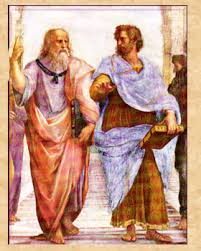
Plato (logic) and Aristotle (experience)
As you can see, Plato is depicted pointing up into the air. He is the lofty thinker: knowledge for him comes from logic, from revelation, and from imagining the abstract ideal Forms of all things.
Aristotle, by contrast, is depicted with his outstretched hand seeming to motion downwards. Whoa, he says, calm down, come down. Aristotle is more down to earth: knowledge for him comes from experience, from empiricism, from gritty conflict and human interactions.
This combination of logic and experience lies at the heart of knowledge in most disciplines. We shall require both in our exploration of democracy today.
Today even regimes that aren’t democratic feel obliged to justify themselves in democratic terms. At present the only four countries that don’t claim to be democratic are Brunei, Burma, Saudi Arabia, Vatican City.
Even the recent military coup in Egypt is being portrayed by its supporters as a move to safeguard Egypt’s nascent democracy against an increasingly undemocratic Mohammed Morsi.
But what do we mean when we say ‘democracy’? Because the way we use the term today isn’t very straightforward.
In a recent BBC interview our old Prime Minister Dr Mahathir said that ‘Asians like to be democratic, but they don’t really understand democracy.’.
Well, I suppose we better make sure we do understand democracy, so that next time Mahathir cannot laugh at us.
Most importantly, the democracy then was democracy in its most straightforward form: it was a direct democracy. This meant that citizens would regularly attend debates on every single big public issue, and then vote on them: whether to impose taxes, whether to make a treaty with another city, whether to go to war, what military strategy to use – all sorts of things. Those issues would all be decided by simple majority voting.
We don’t have that sort of system now. What we have are representative democracies. In our parliamentary system that means that citizens only typically vote once every 4 years, and that’s to select a legislature and (through that) an executive, who are then supposed to decide on almost all public issues in the intervening period. Policy decisions are supposed to be decided by those with special expertise and with access to special information.

The Situation Room
For example, in America, economic policy is decided by the President, the Treasury Secretary, and the Chairman of the Fed. Military strategy is decided by the President and the Joint Chiefs of Staff. For important covert operations like the one that killed Osama bin Laden, decisions would be made by the President and a close group of advisers. In Malaysia all that is probably decided by Rosmah. Okay, I’m kidding, but I think you get my point – in both countries these kinds of decisions lie outside the ambit of the ordinary citizen, and that’s the way it works in most countries around the world that call themselves democratic.
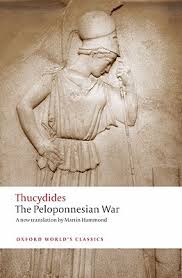
This book here is the history of The Peloponnesian War. It chronicles the war between Athens (a democracy) and Sparta (an oligarchy) almost 2,500 years ago. It was written by Thucydides, an Athenian general involved in the war, and the man hailed as the father of scientific history. Though written as a history, it’s the most powerful argument against democracy I’ve ever come across and it’s helped my understanding of democracy immensely.
In this book Thucydides illustrates the weaknesses of democracy. He chronicles in excruciating detail how Athenian democracy degenerated into mobocracy. In his account of the Sicilian Expedition, he relates how the Athenian people voted in favor of invading Sicily, and forced a general who had strongly advocated against the invasion to command it. Later, when the invasion didn’t go well, they blamed the general for it even though it was their idea in the first place. When the general begged the Athenian people to let the troops come back home, the Athenians refused to listen and instead did the exact opposite: they voted to send even more troops and more ships to fight, throwing more resources into an unwinnable expedition. Finally, the Athenian army got surrounded by their enemies and was massacred, and that general was killed.
Historians of the war also relate the aftermath of the Battle of Arginusae.
In this battle, the Athenian fleet defeated the Spartan navy and won a great victory. The Athenian admirals then decided to concentrate on pursuing the retreating Spartan navy and only sent a smaller force to retrieve the survivors and the dead bodies from their ships that had been sunk in the battle. A storm came and the survivors and the dead bodies were lost. When the admirals got home, the Athenian citizens, stirred to anger by rabid politicians, sentenced all 8 of the admirals to death without due process. And so Athens lost 8 of its finest admirals. Without these admirals the Athenian fleet was crippled, and it was crushed by the Spartan navy within a year. The Spartans then captured the city of Athens and celebrated by tearing down its proud walls to the sound of flute music. Thus, Athens, the great beacon of democracy, was defeated and the Athenians were subjugated under a Spartan dictatorship.
The great lesson of the Peloponnesian War that Thucydides tries to convey is that democracy is a really bad idea. It’s not that Athens happened to be a democracy and happened to lose to oligarchic Sparta: Athens lost to Sparta because it was a democracy. It was because the Athenian people voted on every issue and no one was held accountable for their collective bad decisions. It was because the people shifted the blame to others instead of looking at themselves. It was because they ignored the counsel of generals who knew war and military strategy, choosing to substitute their own uninformed judgment. It was because they were easily riled by demagogues into persecuting their best men – the only men who could have saved them. In the end it was the people who were the architects of their own subjugation.

Hitler was said to have been such a great orator that he could be speaking to a crowd of thousands and many people in that crowd could feel like Hitler was speaking to him alone.
A few years ago I was at a Malaysian Student Leader’s Summit at the Intercontinental Hotel. There was a panel there with Khairy Jamaluddin on it. And you know, KJ is a very eloquent speaker, probably the most eloquent speaker in the whole of BN. At one point a student asked him a question: it was something about why the standard of living in Malaysia is so much lower than in Singapore. KJ replied ‘Why do you want to compare with Singapore? We should be kicking Singapore’s ass!’, and most of the hall cheered and applauded and that was that. The student’s question, an important one, was so easily deflected by a childish appeal to a sense of national pride. This was a reminder for me of how modern societies remain vulnerable to the influence of charismatic demagogues, to people who use passion to counter reason.
Probably the most fundamental criticism of democracy though, is this. Democracy is a system that treats people as equals. Rich or poor, smart or dumb, open or bigoted, educated or uneducated, every citizen gets an equal vote, even though, in many important respects, they’re not equal. ‘How can you have a system that treats people who are grossly unequal as equals?’ the ancients would ask, ‘That’s unjust, in fact, that’s crazy.’. You don’t hear that very often nowadays because it’s not politically correct, but it’s still an important question.
At times, it seems obvious that we’re all equals. But at other times it seems very obvious just how unequal we are.
Consider this – how should I put this delicately? – some people are really really stupid. Some people are really really ignorant and bigoted. You really want a system in which their votes count for the same as yours?
You really want a system in which the votes of Ibrahim Ali and the rest of his Perkasa idiots count for the same as yours?
Anyone remember that video of that Suara Wanita 1 Malaysia president trying to bully that student at UUM that went viral a few months back?

Well, the scary thing wasn’t that president woman, because there are always some crazy people here and there: it was the crowd of students, many of whom cheered and clapped in support even though her speech made virtually no sense at all, especially that bit about chickens and sharks also having problems. Well that wasn’t just a small group of students – there were hundreds of them. You really want a system where each of their votes counts for the same as yours?

But here’s the thing: America’s founding fathers were great readers of the classics. They had read Thucydides and Plato and Thomas Hobbes – all those great thinkers who wrote that democracy was unsustainable because people are too stupid, too violent, too selfish. The founding fathers didn’t ignore the weaknesses of democracy, they learned from them, and they used this knowledge to design a system that was democratic in nature, but which guarded against the weaknesses of the Athenian direct democracy.
What they created wasn’t just a democracy, it was something different: it was a republic. It was rule by the people, but it had special checks against the tyranny of the majority, because they acknowledged that the majority could sometimes be wrong. They chose a system of representative democracy, in which elected representatives (who devoted their time to understanding issues and were privy to secret information) made decisions on behalf of the people, and were accountable to them.
They drew upon the Roman and British traditions, as well as the writings of the French political philosopher Montesquieu, and stressed a separation of powers into a legislature, an executive, and a judiciary, and gave the Supreme Court great powers to check the other two branches. In the Bill of Rights, they put liberty at the heart of their law and enshrined freedom of expression, freedom of the press, due process, and private property – all these safeguarded minority rights against the majority. ‘The patriots of 1776 did not fight to replace the tyranny of a king with the privileges of a few’, said President Obama in his second inaugural address, ‘or the rule of a mob. They gave to us a republic’.
These ideas went on to influence the development of democracy in England, and in other parts of the world, leading to the democratic systems we have now. When the Universal Declaration of Human Rights was drawn up in 1948, it drew on these ideas too. It’s common to think of democracy and human rights as going hand in hand, but they don’t really.
Some of you might remember an incident across the causeway 2 months ago when Zainudin Nordin, a Member of Parliament in Singapore, posted up a quote from a book by the author Terry Goodkind pointing out that ‘Gang rape, after all, is democracy in action.’. He came under a lot of flak for doing that by politically-correct Singaporeans, but he was largely correct.

The unfortunate Zainudin Nordin
If ‘democracy’ just means majority rule, well, that means that whatever the majority decides can and should be done. If the majority wants to rape someone then fine. If the majority wants to persecute someone for speaking his mind then fine. If the majority wants to ban minorities from using the word ‘Allah’, then that’s fine too.

She’s talking about the Chinese in Malaysia, who are a minority, but who control a disproportionately large portion of the wealth in the country. And this isn’t something you find only in Malaysia, you also find this with Chinese diasporas in Indonesia, Thailand, Burma, and the Philippines.
Increasing democracy in these countries can be dangerous, because the majority ethnic group, the Malays in the case of Malaysia, may feel resentful at the disproportionate wealth of the Chinese minority. Their different ethnicities will make this worse, because it’s not, for example, the same as a poor white guy looking at a rich white guy in America. In that scenario, that poor white guy may think that he’s not so different from the rich white guy. He may think that maybe one day if he works hard and works smart he can be just like him. In the Malaysian context, it’s a bit harder. The poor Malay may look at the rich Chinese and think that they’re very different. They look different, their skin is a different color, they have different customs and religions, they might not even speak the same language. He may well conclude that no matter how hard or smart he works, he’ll never be just like that rich Chinese. He may view the other ethnicity as alien.
Where can this feeling of resentment lead? Sure, most of the Chinese may deserve to hold that large share of wealth: they may have worked hard and smart for it, they may have earned it with their initiative and ingenuity, and their country may have benefitted a great deal from their enterprise.
But, as we saw even from the time of Thucydides, human nature is not always fair. It can be selfish and violent and shortsighted, and when members of an ethnic majority look at the wealth of a rich minority that they feel alienated from, there can be the temptation to take it all away. They might just decide, hey, since this country is democratic and we, the ethnic majority, comprise most of the votes, why don’t we just pressure our politicians to take all that minority’s stuff and redistribute it to us instead? In this scenario, the majoritarian side of democracy becomes favored at the expense of checks and human rights. Combine this with political Islam, in which an extremist form of Islam is exploited by demagogues to justify persecuting those who are different, and you have a recipe for great atrocities.
So what’s the solution to this problem? Well, some prominent Chinese families decided to oppose democracy, developing a symbiotic relationship with local despots: the despots kept the majority at bay and in return the families provided (usually financial) support. Chinese elites in the Philippines propped-up the kleptocratic Marcos regime. Chinese tycoons like Bob Hasan and Liem Sioe Liong helped finance the despotic Suharto regime in Indonesia in exchange for special favors and government contracts.
You see something similar in Malaysia with the support the ruling party enjoys from Chinese tycoons like Francis Yeoh of YTL and Vincent Tan of Berjaya. Indeed, this can sometimes extend to direct complicity in repression. Some of you might remember that The Sun newspaper was once quite vocal and objective compared to other Malaysian papers. However, when it was bought over by Berjaya it became much more subdued and biased towards the ruling party.

Protestors in Egypt’s Tahrir Square
Well my answer to the Malaysian dilemma is this. The thing about supporting authoritarianism and policies like the NEP in Malaysia is that they aren’t really solutions because they’re not sustainable; they don’t solve the problem, at most they only delay the reckoning.
The NEP may seem to ease the resentment of the Malays for a while, but what we find in Malaysia is that over time these affirmative action policies create a ‘crutch-mentality’ among many Malays; many have come to rely on the government for handouts instead of learning to compete, and so grow increasingly incapable of improving their economic status, leading to greater frustration in the long-term.
Supporting an authoritarian strong-man may seem to keep the threat of violence at bay, but it doesn’t go away: it simmers under the surface. Meanwhile, an authoritarian government finds it easier to get away with corruption and cronyism and squanders public money instead of using it to improve the country. The BN government also deliberately stokes racial and religious tension to rally support, whilst often prohibiting reasoned discussion on important issues. It severely limits civil society by restricting peaceful protests, gatherings, public forums, and independent media, such that for many years the only outlet was Islamic extremism. The long-term effect of this is that poverty and racial and religious tensions get even worse. The threat of violence may be delayed for a while, but you pay heavily for this borrowed time. The Americans tried this bargain by propping-up dictators in the Middle East, and extremism in the region rose. Some Chinese-Indonesian tycoons tried this for decades by propping-up Suharto. They thought with their money they could control Suharto, and Suharto could control the resentment of the pribumi Indonesians. When the racial riots broke out in 1998, they found out just how in control they really were.

I think that democracy is difficult and messy and complicated, but the alternatives, at least in Malaysia, are unsustainable. I think Winston Churchill was largely right when he said ‘Democracy is the worst form of government, except for all those other forms that have been tried’.
I think our best hope lies in a country that’s more democratic, but which also has strong protections for fundamental rights. It lies in a country where those from poorer backgrounds are given help (primarily through education) to compete with others, in a way that empowers them instead of coddling them. It lies in a country where people are free to debate and discuss the most important issues and work out solutions instead of burying them and leaving them to fester. Such a country will require the richer Chinese minority to actively engage with national problems, to realize that they have a stake in the country too, and to resist throwing money at problems to try to make them go away. There’s a Chinese saying that ‘nothing is a problem if money can solve it’. It’s sometimes true: money can certainly get you out of certain difficulties. But to take it to an extreme, and to think that money can be substituted for the hard work of dialogue and engagement and nation-building, is a grave mistake.
Aristotle wrote that if you assume a wise and benevolent government, a dictatorship is better than a democracy. I think he’s right.
Throughout history however, it seems an immutable rule that ‘absolute power corrupts absolutely’, that those with too much power almost always abuse it. Because of this there are very few governments that are wise and benevolent, and certainly very few that, upon attaining overwhelming power, remain wise and benevolent for very long.
(MTadmin - footnotes were left out due to formatting problems)
So this is what it’s come to on a Wednesday afternoon at the Bar Council, huh? All of you here in this room, listening to a 25-year-old tell you about wisdom.
But what’s the difference between information and wisdom?
Well,
what would happen if we were to stop watching and reading the news?
What would happen if we were to retire into the jungle and live there as
hermits for a year? At the end of that year, would we still know
anything of value about politics, or would all our knowledge be
obsolete? What if we did this for two years, five years, ten? At the end
of that period, what knowledge would we have that’s still of value?Political philosophy seeks to provide that knowledge. It provides timeless lessons on power detached from the frenzy of the 24-hour news cycle: lessons that retain their potency even as politicians come and go, and empires rise and fall.
The origin of Western philosophy is illustrated here, with Raphael’s famous painting of The School of Athens.
Raphael’s School of Athens
The central figures are Plato and his most famous student, Aristotle. These two men weren’t just the quintessential philosophers; they also sought to guide power. Plato was once an adviser at the court of King Dionysius of Syracuse, whilst Aristotle was the tutor of Alexander the Great, probably the greatest conqueror the world has ever known.
Plato (logic) and Aristotle (experience)
As you can see, Plato is depicted pointing up into the air. He is the lofty thinker: knowledge for him comes from logic, from revelation, and from imagining the abstract ideal Forms of all things.
Aristotle, by contrast, is depicted with his outstretched hand seeming to motion downwards. Whoa, he says, calm down, come down. Aristotle is more down to earth: knowledge for him comes from experience, from empiricism, from gritty conflict and human interactions.
This combination of logic and experience lies at the heart of knowledge in most disciplines. We shall require both in our exploration of democracy today.
***
Democracy
as a political system has seen an upsurge in the past hundred years.
According to Freedom House, the number of democracies climbed from just
22 in 1950 to 115 in 2010 out of a total of about 200 countries.Today even regimes that aren’t democratic feel obliged to justify themselves in democratic terms. At present the only four countries that don’t claim to be democratic are Brunei, Burma, Saudi Arabia, Vatican City.
Even the recent military coup in Egypt is being portrayed by its supporters as a move to safeguard Egypt’s nascent democracy against an increasingly undemocratic Mohammed Morsi.
But what do we mean when we say ‘democracy’? Because the way we use the term today isn’t very straightforward.
In a recent BBC interview our old Prime Minister Dr Mahathir said that ‘Asians like to be democratic, but they don’t really understand democracy.’.
Well, I suppose we better make sure we do understand democracy, so that next time Mahathir cannot laugh at us.
The term ‘democracy’ comes from the Greek word demokratia, which was coined from the word demos (people) and the word kratos
(power). It literally meant ‘people power’. In its most basic form,
democracy means a system of government in which the majority of the
citizens determine what’s to be done.
It’s best
to start at the beginning. Apparently there were democracies in India
even before this, but in the West democracy was invented in Athens
around 500 BC.
The democracy then though, was very different from
the democracy we have now. First of all, the voting franchise was
restricted to free adult males above the age of 20 who were Athenian
citizens; women and slaves could not vote.Most importantly, the democracy then was democracy in its most straightforward form: it was a direct democracy. This meant that citizens would regularly attend debates on every single big public issue, and then vote on them: whether to impose taxes, whether to make a treaty with another city, whether to go to war, what military strategy to use – all sorts of things. Those issues would all be decided by simple majority voting.
We don’t have that sort of system now. What we have are representative democracies. In our parliamentary system that means that citizens only typically vote once every 4 years, and that’s to select a legislature and (through that) an executive, who are then supposed to decide on almost all public issues in the intervening period. Policy decisions are supposed to be decided by those with special expertise and with access to special information.
The Situation Room
For example, in America, economic policy is decided by the President, the Treasury Secretary, and the Chairman of the Fed. Military strategy is decided by the President and the Joint Chiefs of Staff. For important covert operations like the one that killed Osama bin Laden, decisions would be made by the President and a close group of advisers. In Malaysia all that is probably decided by Rosmah. Okay, I’m kidding, but I think you get my point – in both countries these kinds of decisions lie outside the ambit of the ordinary citizen, and that’s the way it works in most countries around the world that call themselves democratic.
Indeed,
the ancient Greeks wouldn’t have regarded modern democracies as
democracies at all. As Donald Kagan, former Sterling Professor of
Classics and History at Yale, notes, ‘the Athenians would have been
astonished at the claim of modern states to [the title of democracy]’.
‘To them an essential feature of democracy was the direct and full
sovereignty of the majority of citizens. Government by elected
representatives…appointment to important offices, unelected
bureaucracies…terms for elective office of more than one year, all of
these would have seemed clear and deadly enemies of what reasonable
people might understand by democracy.’.
But what’s this mean? How did the fact that ancient Athens was a direct democracy affect decisions on public issues?
What
this means, first of all, is that there were few secrets. Because
everything had to be openly debated and discussed in the Athenian
Assembly and then openly voted on, virtually everything became public
knowledge. If, for example, the Athenians decided to send a fleet
against the Spartans, the Spartans would know about it because they’d
have spies within the Assembly who’d report to them as soon as a
decision was reached.
This also means that a lot of
important decisions, including military strategy, were made by people
with no special expertise and with no access to special information,
people who were sometimes ignorant and uneducated, people who could be
easily influenced by demagogues into making rash choices.
This book here is the history of The Peloponnesian War. It chronicles the war between Athens (a democracy) and Sparta (an oligarchy) almost 2,500 years ago. It was written by Thucydides, an Athenian general involved in the war, and the man hailed as the father of scientific history. Though written as a history, it’s the most powerful argument against democracy I’ve ever come across and it’s helped my understanding of democracy immensely.
In this book Thucydides illustrates the weaknesses of democracy. He chronicles in excruciating detail how Athenian democracy degenerated into mobocracy. In his account of the Sicilian Expedition, he relates how the Athenian people voted in favor of invading Sicily, and forced a general who had strongly advocated against the invasion to command it. Later, when the invasion didn’t go well, they blamed the general for it even though it was their idea in the first place. When the general begged the Athenian people to let the troops come back home, the Athenians refused to listen and instead did the exact opposite: they voted to send even more troops and more ships to fight, throwing more resources into an unwinnable expedition. Finally, the Athenian army got surrounded by their enemies and was massacred, and that general was killed.
Historians of the war also relate the aftermath of the Battle of Arginusae.
In this battle, the Athenian fleet defeated the Spartan navy and won a great victory. The Athenian admirals then decided to concentrate on pursuing the retreating Spartan navy and only sent a smaller force to retrieve the survivors and the dead bodies from their ships that had been sunk in the battle. A storm came and the survivors and the dead bodies were lost. When the admirals got home, the Athenian citizens, stirred to anger by rabid politicians, sentenced all 8 of the admirals to death without due process. And so Athens lost 8 of its finest admirals. Without these admirals the Athenian fleet was crippled, and it was crushed by the Spartan navy within a year. The Spartans then captured the city of Athens and celebrated by tearing down its proud walls to the sound of flute music. Thus, Athens, the great beacon of democracy, was defeated and the Athenians were subjugated under a Spartan dictatorship.
The great lesson of the Peloponnesian War that Thucydides tries to convey is that democracy is a really bad idea. It’s not that Athens happened to be a democracy and happened to lose to oligarchic Sparta: Athens lost to Sparta because it was a democracy. It was because the Athenian people voted on every issue and no one was held accountable for their collective bad decisions. It was because the people shifted the blame to others instead of looking at themselves. It was because they ignored the counsel of generals who knew war and military strategy, choosing to substitute their own uninformed judgment. It was because they were easily riled by demagogues into persecuting their best men – the only men who could have saved them. In the end it was the people who were the architects of their own subjugation.
Thucydides wasn’t the only
one who thought democracy was a terrible system. This view was shared
by most of the great thinkers of that time. Many of the criticisms they
made of democracy are still very valid today.
Socrates in Plato’s Republic
ranked democracy as the second-worst kind of political system – just
one step away from tyranny. He described democracies as anarchic cities
where the people are slaves to their desires.
Indeed,
Socrates would go on to personify the injustice a democracy was capable
of. As the father of Western philosophy, he spent his time talking to
his fellow Athenians and provoking them into questioning absolutely
everything, including the gods, the way they lived their lives, and the
Athenian democratic system itself. Eventually, his enemies got sick of
him and had him charged with ‘corrupting the youth and disbelieving in
the gods of the city’. He was found guilty by the democracy and put to
death. In the process, he became history’s most famous martyr for free
speech, and his death was a powerful indictment of democracy –
demonstrating how it could kill people unjustly. Socrates died by
drinking poison, but he held to his principles until the end, something
that’s captured very vividly in this painting.
The Death of Socrates, by Jacques Louis-David
Likewise,
Cleon, an Athenian politician, denounced democracy for creating a city
of people who would support whoever was the best speaker, regardless of
what that person was proposing. Here’s how Cleon scolded the Athenians
for what he called their ‘addiction to argument’:
‘You
like to be spectators of speeches…Good speakers advocating some future
course of action are all the evidence you need to judge it possible…you
are in thrall to the pleasure of listening, and you sit here more like
spectators at the sophists’ displays than men taking decisions for their
city.’
I think Cleon hits on an important weakness here. There
were lots of factors leading to the rise of people like Mussolini and
Hitler. But one important factor was that both of them were said to have
been very good speakers. They could make lots of people listen to them
and support their policies of fascism and brutal nationalism.Hitler was said to have been such a great orator that he could be speaking to a crowd of thousands and many people in that crowd could feel like Hitler was speaking to him alone.
A few years ago I was at a Malaysian Student Leader’s Summit at the Intercontinental Hotel. There was a panel there with Khairy Jamaluddin on it. And you know, KJ is a very eloquent speaker, probably the most eloquent speaker in the whole of BN. At one point a student asked him a question: it was something about why the standard of living in Malaysia is so much lower than in Singapore. KJ replied ‘Why do you want to compare with Singapore? We should be kicking Singapore’s ass!’, and most of the hall cheered and applauded and that was that. The student’s question, an important one, was so easily deflected by a childish appeal to a sense of national pride. This was a reminder for me of how modern societies remain vulnerable to the influence of charismatic demagogues, to people who use passion to counter reason.
Probably the most fundamental criticism of democracy though, is this. Democracy is a system that treats people as equals. Rich or poor, smart or dumb, open or bigoted, educated or uneducated, every citizen gets an equal vote, even though, in many important respects, they’re not equal. ‘How can you have a system that treats people who are grossly unequal as equals?’ the ancients would ask, ‘That’s unjust, in fact, that’s crazy.’. You don’t hear that very often nowadays because it’s not politically correct, but it’s still an important question.
At times, it seems obvious that we’re all equals. But at other times it seems very obvious just how unequal we are.
Consider this – how should I put this delicately? – some people are really really stupid. Some people are really really ignorant and bigoted. You really want a system in which their votes count for the same as yours?
You really want a system in which the votes of Ibrahim Ali and the rest of his Perkasa idiots count for the same as yours?
Anyone remember that video of that Suara Wanita 1 Malaysia president trying to bully that student at UUM that went viral a few months back?
Well, the scary thing wasn’t that president woman, because there are always some crazy people here and there: it was the crowd of students, many of whom cheered and clapped in support even though her speech made virtually no sense at all, especially that bit about chickens and sharks also having problems. Well that wasn’t just a small group of students – there were hundreds of them. You really want a system where each of their votes counts for the same as yours?
John T.
Wenders, former Professor of Economics at the University of Idaho,
described democracy as ‘Two coyotes and a lamb voting on what to have
for lunch’. Ultimately, a big part of whether you support democracy or
not depends on the confidence you have in your fellow citizens.
Confidence in their knowledge and intelligence (at least to a minimum
level), and most of all, confidence in their values and their basic
human decency. If you view most of your fellow citizens as coyotes,
you’re unlikely to be too hot about democracy.
Well,
turns out, many people throughout history were convinced by those
arguments against democracy, and so after ancient Greece was conquered
by Philip of Macedon (the father of Alexander the Great) in 337 BC,
democracy largely disappeared from the Western world until the birth of
the American republic around 1789, more than 2,000 years later. Although
there are significant differences between democracy in early America
and present day democracy (for example only a minority held the voting
franchise), this was the prototype.
Scene at the Signing of the Constitution of the United States, by Howard Chandler Christy
Thus
began the great American experiment with democracy. After fleeing
persecution and bigotry in Europe, and having to fight for their
independence from the British Empire, the last thing the Americans
wanted was rule by another tyrant.But here’s the thing: America’s founding fathers were great readers of the classics. They had read Thucydides and Plato and Thomas Hobbes – all those great thinkers who wrote that democracy was unsustainable because people are too stupid, too violent, too selfish. The founding fathers didn’t ignore the weaknesses of democracy, they learned from them, and they used this knowledge to design a system that was democratic in nature, but which guarded against the weaknesses of the Athenian direct democracy.
What they created wasn’t just a democracy, it was something different: it was a republic. It was rule by the people, but it had special checks against the tyranny of the majority, because they acknowledged that the majority could sometimes be wrong. They chose a system of representative democracy, in which elected representatives (who devoted their time to understanding issues and were privy to secret information) made decisions on behalf of the people, and were accountable to them.
They drew upon the Roman and British traditions, as well as the writings of the French political philosopher Montesquieu, and stressed a separation of powers into a legislature, an executive, and a judiciary, and gave the Supreme Court great powers to check the other two branches. In the Bill of Rights, they put liberty at the heart of their law and enshrined freedom of expression, freedom of the press, due process, and private property – all these safeguarded minority rights against the majority. ‘The patriots of 1776 did not fight to replace the tyranny of a king with the privileges of a few’, said President Obama in his second inaugural address, ‘or the rule of a mob. They gave to us a republic’.
These ideas went on to influence the development of democracy in England, and in other parts of the world, leading to the democratic systems we have now. When the Universal Declaration of Human Rights was drawn up in 1948, it drew on these ideas too. It’s common to think of democracy and human rights as going hand in hand, but they don’t really.
Some of you might remember an incident across the causeway 2 months ago when Zainudin Nordin, a Member of Parliament in Singapore, posted up a quote from a book by the author Terry Goodkind pointing out that ‘Gang rape, after all, is democracy in action.’. He came under a lot of flak for doing that by politically-correct Singaporeans, but he was largely correct.
The unfortunate Zainudin Nordin
If ‘democracy’ just means majority rule, well, that means that whatever the majority decides can and should be done. If the majority wants to rape someone then fine. If the majority wants to persecute someone for speaking his mind then fine. If the majority wants to ban minorities from using the word ‘Allah’, then that’s fine too.
But
human rights opposes this. It draws a line in the sand. It says there
are some things you cannot do. It says that some rights are so precious
and so fundamental that they should be protected even if the majority
decides to infringe them.
It’s no coincidence that the
Universal Declaration of Human Rights was drawn up in the bloody
aftermath of WWII and the Holocaust, in which millions of people, many
of them minorities, were massacred. It was because the drafters of the
Declaration realized that, whilst democracy was important, so too were
specially-protected human rights, and in modern democracies there’s a
calculated tension between the two.
And so when we use
the term ‘democracy’ today, it doesn’t just mean ‘majority rule’. It has
become something far more complex. It means majority rule, but majority
rule through representation, and with checks and protections for
fundamental rights in place. It is comprised of different, and often
conflicting, elements, and it is, I think, a better system of government
because of this.
***
But
how does democracy fare in the Malaysian context? How does it interact
with political Islam? How does it function in a country as religiously
and ethnically diverse (some would say ‘religiously and ethnically divided’) as Malaysia.
In this book, World On Fire: How Exporting Free Market Democracy Breeds Ethnic Hatred and Global Instability,
Yale law professor Amy Chua helps to answer those questions. This is a
disturbing and iconoclastic book, a work of rigorous scholarship, and
it’s contributed a great deal to my understanding of democracy in the
region.
In
short, the prognosis is worrying. Professor Chua observes that rapid
democratization can be very dangerous in countries with market-dominant
minorities.
What do you think she’s talking about here when she says ‘market-dominant minorities’?She’s talking about the Chinese in Malaysia, who are a minority, but who control a disproportionately large portion of the wealth in the country. And this isn’t something you find only in Malaysia, you also find this with Chinese diasporas in Indonesia, Thailand, Burma, and the Philippines.
Increasing democracy in these countries can be dangerous, because the majority ethnic group, the Malays in the case of Malaysia, may feel resentful at the disproportionate wealth of the Chinese minority. Their different ethnicities will make this worse, because it’s not, for example, the same as a poor white guy looking at a rich white guy in America. In that scenario, that poor white guy may think that he’s not so different from the rich white guy. He may think that maybe one day if he works hard and works smart he can be just like him. In the Malaysian context, it’s a bit harder. The poor Malay may look at the rich Chinese and think that they’re very different. They look different, their skin is a different color, they have different customs and religions, they might not even speak the same language. He may well conclude that no matter how hard or smart he works, he’ll never be just like that rich Chinese. He may view the other ethnicity as alien.
Where can this feeling of resentment lead? Sure, most of the Chinese may deserve to hold that large share of wealth: they may have worked hard and smart for it, they may have earned it with their initiative and ingenuity, and their country may have benefitted a great deal from their enterprise.
But, as we saw even from the time of Thucydides, human nature is not always fair. It can be selfish and violent and shortsighted, and when members of an ethnic majority look at the wealth of a rich minority that they feel alienated from, there can be the temptation to take it all away. They might just decide, hey, since this country is democratic and we, the ethnic majority, comprise most of the votes, why don’t we just pressure our politicians to take all that minority’s stuff and redistribute it to us instead? In this scenario, the majoritarian side of democracy becomes favored at the expense of checks and human rights. Combine this with political Islam, in which an extremist form of Islam is exploited by demagogues to justify persecuting those who are different, and you have a recipe for great atrocities.
So what’s the solution to this problem? Well, some prominent Chinese families decided to oppose democracy, developing a symbiotic relationship with local despots: the despots kept the majority at bay and in return the families provided (usually financial) support. Chinese elites in the Philippines propped-up the kleptocratic Marcos regime. Chinese tycoons like Bob Hasan and Liem Sioe Liong helped finance the despotic Suharto regime in Indonesia in exchange for special favors and government contracts.
You see something similar in Malaysia with the support the ruling party enjoys from Chinese tycoons like Francis Yeoh of YTL and Vincent Tan of Berjaya. Indeed, this can sometimes extend to direct complicity in repression. Some of you might remember that The Sun newspaper was once quite vocal and objective compared to other Malaysian papers. However, when it was bought over by Berjaya it became much more subdued and biased towards the ruling party.
Professor
Amy Chua’s solution is to endorse schemes like Malaysia’s NEP, arguing
that its affirmative action policies reduce resentment by leveling the
wealth disparity.
To an extent I can see where they’re
coming from. These solutions aim to reduce the discrepancy between
political and economic power.
So are these people right?
Should I, as a Chinese Malaysian, oppose democracy in Malaysia and
throw my support behind the authoritarian BN government? Should I
endorse the NEP? What do you think? Tough call, huh?
By
the way, there are parallels between this dilemma and the Arab Spring.
In December 2010, the self-immolation of a young Tunisian man triggered a
wave of democratic protests across the Arab world, and revolutions in
Tunisia, Egypt, Libya, and Syria. And the US government, which had been
calling for democratization for years, suddenly had no idea what to do,
as was seen from its confused reaction. The Americans were apprehensive
because they had been rather deplorably propping-up those Middle Eastern
dictators for decades, and now, with this rapid democratization, they
were afraid of what the Arab people might vote for, and feared the rise
of Islamic extremism.
Protestors in Egypt’s Tahrir Square
Well my answer to the Malaysian dilemma is this. The thing about supporting authoritarianism and policies like the NEP in Malaysia is that they aren’t really solutions because they’re not sustainable; they don’t solve the problem, at most they only delay the reckoning.
The NEP may seem to ease the resentment of the Malays for a while, but what we find in Malaysia is that over time these affirmative action policies create a ‘crutch-mentality’ among many Malays; many have come to rely on the government for handouts instead of learning to compete, and so grow increasingly incapable of improving their economic status, leading to greater frustration in the long-term.
Supporting an authoritarian strong-man may seem to keep the threat of violence at bay, but it doesn’t go away: it simmers under the surface. Meanwhile, an authoritarian government finds it easier to get away with corruption and cronyism and squanders public money instead of using it to improve the country. The BN government also deliberately stokes racial and religious tension to rally support, whilst often prohibiting reasoned discussion on important issues. It severely limits civil society by restricting peaceful protests, gatherings, public forums, and independent media, such that for many years the only outlet was Islamic extremism. The long-term effect of this is that poverty and racial and religious tensions get even worse. The threat of violence may be delayed for a while, but you pay heavily for this borrowed time. The Americans tried this bargain by propping-up dictators in the Middle East, and extremism in the region rose. Some Chinese-Indonesian tycoons tried this for decades by propping-up Suharto. They thought with their money they could control Suharto, and Suharto could control the resentment of the pribumi Indonesians. When the racial riots broke out in 1998, they found out just how in control they really were.
Indonesian pribumi rioters burn a portrait of Liem Sioe Liong and his wife pillaged from his house during the 1998 riots
I
had the pleasure of talking to Professor Amy Chua when I was a student
at Yale, and during our conversation I put all that to her. She said she
hadn’t realized those complications. I asked her if she could think of a
more sustainable solution to this problem. Professor Chua is an
exceptionally careful and meticulous scholar: she said she didn’t have
an answer, and that she would need to do a lot more research before she
could come up with one.I think that democracy is difficult and messy and complicated, but the alternatives, at least in Malaysia, are unsustainable. I think Winston Churchill was largely right when he said ‘Democracy is the worst form of government, except for all those other forms that have been tried’.
I think our best hope lies in a country that’s more democratic, but which also has strong protections for fundamental rights. It lies in a country where those from poorer backgrounds are given help (primarily through education) to compete with others, in a way that empowers them instead of coddling them. It lies in a country where people are free to debate and discuss the most important issues and work out solutions instead of burying them and leaving them to fester. Such a country will require the richer Chinese minority to actively engage with national problems, to realize that they have a stake in the country too, and to resist throwing money at problems to try to make them go away. There’s a Chinese saying that ‘nothing is a problem if money can solve it’. It’s sometimes true: money can certainly get you out of certain difficulties. But to take it to an extreme, and to think that money can be substituted for the hard work of dialogue and engagement and nation-building, is a grave mistake.
Aristotle wrote that if you assume a wise and benevolent government, a dictatorship is better than a democracy. I think he’s right.
Throughout history however, it seems an immutable rule that ‘absolute power corrupts absolutely’, that those with too much power almost always abuse it. Because of this there are very few governments that are wise and benevolent, and certainly very few that, upon attaining overwhelming power, remain wise and benevolent for very long.
Aristotle,
empiricist that he was, recognized this. If you assume a wise and
benevolent government, he wrote, a dictatorship is better than a
democracy. But a corrupted dictatorship is worse than a corrupted
democracy. And since actual governments tend towards corruption and
abuse, in reality it is democracy that ends up being better. In this way
Aristotle arrived at a qualified defense of democracy.
Ultimately,
I support democracy in most cases because I share this deep mistrust of
people who are given too much power over others, and modern democracy
has the most effective checks against such power.
There
are other reasons too. The ancients warned that democracy can descend
into mobocracy; instigated by charismatic leaders, the people can make
terrible decisions and persecute minorities. All that remains true.
However,
it’s also true that, whilst Athens lost to Sparta in The Peloponnesian
War, modern representative democracies have tended to win against
dictatorships when they fought. It’s also true that the rights of
minorities have been better protected under modern democracies than
under authoritarian regimes. And it’s also true that democracies tend to
be more prosperous and better at encouraging creativity and innovation.
Modern
democracy is a concept perpetually in tension with itself, with its own
conflicting elements. It will remain a sound system of government so
long as people remember that it’s supposed to be that way.
Thank you.(MTadmin - footnotes were left out due to formatting problems)
Persoalan
sama ada orang kafir terkena hukum Islam atau tidak sebenarnya tidak
pernah timbul dalam benak kaum Muslimin generasi awal mahupun generasi
setelahnya. Kaum Muslimin dahulu benar-benar faham bahawa satu-satunya
hukuman yang wajib ke atas manusia adalah hukum Allah.
Allah adalah Pencipta manusia dan Allah-lah Yang Maha Mengatur dan Maha Menghukum. Inilah yang difahami dan diterapkan oleh umat Islam berabad-abad lamanya. Namun, setelah kelemahan berfikir melanda umat Islam dan negeri-negeri kaum Muslimin satu per satu jatuh ke tangan penjajah kuffar, maka di negeri-negeri kaum Muslimin ini telah diterapkan sistem kufur/sekular penjajah. Setelah mereka memberi kemerdekaan kepada negeri-negeri ini, pemimpin sekular yang telah dilantik oleh kuffar penjajah ini tetap meneruskan undang-undang kufur penjajah di samping sedikit penerapan undang-undang Islam dalam hal ibadat dan kekeluargaan sahaja. Hasilnya, kaum Muslimin, termasuklah golongan ulama telah terbiasa dan ‘terbius’ dengan kefahaman bahawa undang-undang Islam hanyalah untuk orang-orang Islam sahaja, manakala orang-orang kafir dibiarkan mengamalkan undang-undang kafir.
Betapa terpesongnya pemikiran di kalangan ulama ini, sehingga ada antara mereka yang beranggapan bahawa undang-undang kufur (yang dibuat oleh negara) tetap terpakai ke atas umat Islam manakala orang kafir pula sekali-kali tidak boleh dikenakan undang-undang Islam ke atas mereka. Apatah lagi di dalam sebuah negara yang bermasyarakat majmuk, para pemimpin dan ulama yang ada terus ‘dikuasai’ oleh pemikiran kufur bahawa undang-undang Islam tidak boleh dilaksanakan ke atas orang-orang kafir, bukan setakat kerana ia tidak terpakai, malah tidak boleh dilaksanakan kerana perlu ‘menjaga hati’ orang kafir. Inilah di antara kejayaan kuffar Barat di dalam memasukkan racun sekular mereka ke dalam tubuh umat Islam.
Setelah sistem demokrasi-pilihan raya diperkenalkan oleh Barat ke atas negeri-negeri umat Islam dan setiap orang kafir diberi hak mengundi untuk memilih wakil rakyat, maka para pemimpin dan ulama Islam terjerat sekali lagi di mana untuk mereka meraih pemerintahan, mereka mesti mendapat sokongan/undi dari orang kafir, maka ‘hati’ orang kafir perlu dijaga agar menyokong/mengundi mereka. Oleh sebab sebahagian besar orang kafir (sekarang) tidak mahu atau tidak suka kepada undang-undang Islam, maka usaha-usaha dilakukan untuk memberi kefahaman kepada orang kafir bahawa undang-undang Islam tidak terkena ke atas mereka.
Jadi, tidak hairanlah jika ramai di kalangan umat Islam yang, walaupun sayangkan Islam, namun oleh kerana sudah lama hidup dalam sistem sekular di mana racun ini sudah menjadi sebati dalam diri mereka, memahami bahawa hukum Allah ini hanyalah untuk orang Islam semata-mata, manakala orang kafir tidak terkena hukum Allah, tetapi diberi alternatif. Mereka menyatakan bahawa perlaksanaan hukum hudud, qisas dan ta'zir hanya dikenakan ke atas orang Islam sahaja manakala penduduk bukan Islam diberi pilihan sama ada hendak menerima hukum tersebut atau tetap berhukum dengan hukum kufur. Untuk menyokong pendapat ini, mereka beristidlal dengan firman Allah,
“Jika mereka datang kepadamu (untuk meminta keputusan), maka putuskanlah (perkara itu) di antara mereka, atau berpalinglah dari mereka. Jika kamu berpaling dari mereka, maka mereka tidak memberi mudharat kepadamu sedikitpun. Dan jika kamu memutuskan perkara mereka, maka putuskanlah (perkara itu) di antara mereka dengan adil. Sesungguhnya Allah menyukai orang-orang yang adil” [TMQ al-Maidah (5):42].
Mereka seterusnya menafsirkan ayat ini bahawa Allah memberi pilihan kepada orang kafir sama ada untuk menerima hukum hudud, qisas dan ta'zir atau memilih untuk berhukum dengan hukum mereka (hukum kufur). Lafaz “fa in ja’uka fahkum bainahum au a’ridh anhum” (jika mereka datang kepada mu, maka putuskanlah di antara mereka atau berpaling dari mereka) mereka tafsirkan sebagai ‘pilihan’ yang diberi kepada ‘orang kafir’ sama ada untuk berhukum dengan hukum Islam atau pun hukum kufur. Oleh yang demikian, mereka telah menyatakan bahawa orang kafir yang tinggal dalam negara Islam tidak terkena hukum Islam, kecuali orang kafir itu sendiri memilih untuk berhukum dengan hukum Islam.
Mengkaji dengan teliti dari aspek mafhum, mantuq dan juga asbabunuzul ayat di atas, maka kita dapati bahawa tafsiran yang dibuat adalah amat salah dan mengelirukan. Dari segi lafaz itu sendiri, kita memahami bahawa:
(i) Allah memberi pilihan kepada Rasulullah (sebagai Ketua Negara) bukannya kepada orang kafir; dan
(ii) Pilihan yang diberi itu adalah sama ada untuk menghukum orang kafir (fahkum) dengan hukum Islam atau berpaling dari mereka (a’ridh), bukannya pilihan untuk berhukum dengan hukum Islam atau berhukum dengan hukum kufur. ‘Berpaling’ maksudnya tidak menghukum (membiarkan) mereka.
Secara ringkasnya dapat kita simpulkan bahawa ayat ini ditujukan kepada Rasulullah (sebagai Ketua Negara) dan Allah memberi dua alternatif kepada Rasul sama ada ingin menghukum kesalahan mereka dengan hukuman Allah atau membiarkan mereka tanpa dihukum. Untuk menjelaskan lagi perkara ini, kita boleh melihat pandangan beberapa ulama muktabar berkenaan dengan hukum fiqh yang mereka istinbat dari ayat ini:-
Ibnu Kathir menyatakan:
Jika mereka (orang kafir) datang kepada kamu (iaitu) untuk meminta pengadilan dari kamu, maka hakimilah antara mereka, atau biarkan mereka. Jika kamu berpaling daripada mereka, maka mereka tidak akan dapat membahayakanmu sedikit pun. Maka tidak mengapa untuk kamu tidak mengadili persengketaan di antara mereka kerana sebenarnya mereka tidak berniat untuk berhukum kepada kamu berdasarkan hak, tetapi mereka inginkan apa yang sesuai dengan hawa nafsu mereka [Ibnu Kathir, Tafsir Al-Quran Al-Azhim]. Qusairy menyatakan: Tidak wajib ke atas kita untuk mengadili di antara mereka bila mereka bukan kafir zimmi tetapi kita boleh mengadili mereka jika kita mahu [Imam Al-Qurthubi, Al-Jami’li Akhamil Quran]. Sa'id bin Jubair menjelaskan: Jika mereka (orang Yahudi) datang kepadamu (untuk meminta keputusan), maka putuskanlah (perkara itu) di antara mereka atau berpalinglah dari mereka. Dalam ayat ini Allah memberikan keluasan bagi seorang hakim untuk memilih antara memutuskan perkara mereka atau tidak menghukum, dan membiarkannya terkontang-kanting [Ibnu Jawzi, Nawasikhul Qur’an].
Dari aspek asbabun nuzul ayat di atas, kita akan lebih memahami maksud ayat tersebut dengan benar apabila melihat kepada sebab penurunan ayat ini di tambah dengan memahami kedudukan/aspek geo-politik orang kafir (Yahudi) yang disebutkan di dalam ayat tersebut. Imam Sayuthi menjelaskan,
“Seorang lelaki dari suku Yahudi di Fadak telah berzina, lalu orang-orang Fadak menulis surat kepada Yahudi di Madinah supaya bertanya kepada Muhammad Sallallahu ‘alihi wa Sallam tentang hukum orang yang berzina itu. Jika Muhammad memerintah untuk disebat, maka terimalah, tetapi jika Muhammad memerintah untuk direjam, maka tolaklah. Orang Yahudi bertanya dan Rasulullah Sallallahu ‘alihi wa Sallam pun menjawab akan mereka, lalu sebagaimana dinyatakan di dalam hadis, turunlah ayat “Jika mereka datang kepadamu, maka hukumlah mereka atau berpaling dari mereka” [Imam Sayuthi, Tafsir Jalalain & Kitab Lubabunuqul Fi Asbabinuzul].
Kita perlu memahami bahawa Fadak adalah sebuah kota di utara Hijaz, tidak jauh dari Khaibar dan berada di luar dari Daulah Islam Madinah. Jauhnya 2-3 hari perjalanan menaiki unta dari Madinah. Kota ini sekarang telah ditukar namanya kepada Kampung Huwayyit (berkedudukan di luar Madinah). Jarak sebenar antara Madinah (24°27’U, 39°37’T) dan Huwayyit (25°35’U, 40°22’T) lebih kurang 150 km dengan pengukuran secara rentas. Berdasarkan hal ini, kita perlu faham bahawa Yahudi yang dimaksudkan dalam ayat di atas bukan Yahudi dari kafir zimmi (kafir yang tinggal dalam Daulah Islam) tetapi mereka adalah dari kelompok Yahudi yang tinggal di luar Madinah (bukan warganegara Daulah). Dengan kata lain, ayat di atas adalah khusus untuk kes kafir warga asing yang ingin berhukum dengan hukum Islam, bukannya ayat berkenaan kafir warganegara Daulah (kafir zimmi).
Di sini satu lagi kesalahan pihak yang menafsirkan ayat di atas apabila mereka tidak melihat akan fakta ini. Hukum ke atas kafir zimmi (kafir warganegara Daulah) berbeza dengan hukum ke atas kafir yang bukan warganegara Daulah. Oleh itu, adalah satu kesalahan fatal apabila menjadikan ayat ini sebagai dalil untuk menunjukkan bahawa kafir yang tinggal dalam negara (zimmi) tidak terkena hukum Allah.
Kafir zimmi, sebagaimana yang akan diterangkan nanti, adalah terikat dengan hukum Islam, tidak sebagaimana kafir yang bukan warganegara. Bagi kafir yang tinggal di luar Daulah Islam, tetapi mereka ingin berhukum dengan hukum Daulah (hukum Allah), maka Ketua Negara boleh memilih untuk menghukum mereka (dengan hukum Allah), atau membiarkan mereka (tidak menghukum). Tetapi Ketua Negara sekali-kali tidak dibenarkan menghukum mereka mengikut hukum mereka/kufur. Jika kita menghukum mereka mengikut hukum kufur, maka ini adalah satu dosa dan keharaman kerana kita telah berhukum bukan dengan apa yang telah diturunkan oleh Allah. Seseorang itu boleh menjadi kafir, zalim atau fasik sekiranya tidak memutuskan hukum dengan apa yang Allah telah turunkan (lihat Surah al-Maidah [5]:44, 45 & 47).
Dalam banyak ayat lain lagi, Allah Subhanahu wa Ta’ala menjelaskan bahawa haram bagi orang Islam untuk memutuskan hukum selain dengan Kitabullah. FirmanNya,
“Maka putuskanlah perkara atas mereka menurut apa yang Allah turunkan (hukum Islam), dan janganlah kamu mengikuti hawa nafsu mereka dengan meninggalkan kebenaran (hukum Islam) yang telah datang kepadamu” [TMQ al-Maidah (5):48].
Allah juga berfirman,
“Sesungguhnya Kami telah menurunkan Kitab kepadamu dengan membawa kebenaran, supaya kamu menghukum antara manusia dengan apa yang telah Allah wahyukan kepadamu” [TMQ an-Nisa (4):105].
Ayat-ayat ini berbentuk umum dan ada ayat yang mana Allah menggunakan lafaz “manusia” yang menerangkan kepada kita bahawa, dalam keadaan kita mengadili sesuatu kes atau ingin menghukum, maka hukum Allah-lah satu-satunya hukum yang wajib dilaksanakan ke atas semua manusia (bukannya ke atas orang Islam sahaja) dan langsung tidak ada kebenaran/perintah dari Allah untuk kita (orang Islam) berhukum atau menghukum manusia dengan hukum selain hukum Allah.
Kafir Zimmi Terikat Dengan Hukum Islam
Kewajiban melaksanakan hukum Islam ke atas kafir zimmi merupakan satu perkara yang teramat jelas di dalam Islam.
Tidak ada khilaf di kalangan ulama tentangnya dan kafir zimmi yang telah hidup di dalam Daulah Islam selama lebih 13 abad pun mematuhi hal ini. Kita perlu memahami bahawa hukum Islam adalah hukum Negara, bukannya hukum ke atas individu Muslim sahaja. Contoh yang mudah sahaja seperti hukum potong tangan untuk si pencuri – ini adalah hukum negara di mana tidak kiralah sama ada pencuri itu Muslim atau kafir, maka wajib dipotong tangannya. Begitu jugalah dengan hukum rompak, bunuh, judi, riba, rogol, zina dan sebagainya. Hukum Islam adalah hukum yang wajib diterapkan oleh pemerintah ke atas setiap warganegara.
Di dalam kehidupan Daulah Islamiyyah, orang-orang kafir zimmi (sesuai dengan akad zimmah dengan Negara Daulah) hanya dibolehkan menjalankan hukum-hakam yang berhubungan dengan akidah, ibadah, makanan, perkahwinan, kematian dan sejenisnya menurut hukum-hakam agama mereka, asalkan tidak menam¬pakkan syi'ar-syi'ar agama mereka di hadapan kaum Muslim. Namun, dalam perkara yang menyangkut hukum-hakam umum iaitu mua’malat dan uqubat (hudud, qisas, ta’zir dan mukhalafat), maka atas mereka (orang-orang kafir zimmi) diterapkan hukum¬-hakam Islam sepenuhnya.
Sebenarnya kedudukan mereka sebagai warganegara Daulah Islamiyah adalah sama dengan kaum Muslimin dari aspek hak dan tanggungjawab sebagai warganegara. Surah al-Maidah (5):48 dan juga an-Nisa (4):105 di atas sudah cukup menunjukkan bahawa hukum-hukum Islam itu wajib dilaksanakan ke atas seluruh warga negara, sama ada Muslim mahupun kafir zimmi.
Teramat salahlah pandangan yang menyatakan bahawa kafir zimmi tidak terikat dengan hukum Islam. Sungguh jauh dari kebenaran pandangan ini dan teramat ganjil sekali. Apa tidaknya, istilah dan pengertian ‘zimmi’ itu sendiri bermaksud “perlindungan yang diberikan kepada mereka kerana ketundukan mereka kepada hukum-hakam Daulah (hukum Islam)”. Status ‘zimmi’ (perlindungan) diberikan kepada mereka sebagai balasan dari ‘jizyah’ yang mereka bayar kepada Daulah.
Dan jizyah ini adalah hukum Islam, bukan hukum kufur. Jadi, bayaran jizyah yang dikenakan ke atas kafir zimmi ini adalah terlalu jelas dan nyata dan secara automatiknya menunjukkan kepada kita bahawa kafir zimmi wajib mengikut atau tunduk kepada hukum Islam. Dengan kata lain, jika kafir zimmi tidak tertakluk kepada hukum Islam, maka tidak perlulah mereka membayar jizyah. Dan hal ini demi Allah sesungguhnya tidak akan terjadi (kerana kafir zimmi wajib membayar jizyah dengan maksud mereka wajib tunduk kepada hukum Islam). Firman Allah Subhanahu wa Ta’ala,
“Perangilah orang-orang yang tidak beriman kepada Allah dan tidak beriman kepada hari akhirat, dan mereka pula tidak mengharamkan apa yang telah diharamkan oleh Allah dan RasulNya, dan tidak beragama dengan ugama yang benar, iaitu dari orang-orang yang diberikan Kitab (kaum Yahudi dan Nasrani), sehingga mereka membayar jizyah dengan keadaan tunduk patuh” [TMQ at-Taubah (9):29].
Apabila orang-orang kafir zimmi menolak untuk dihukumi dengan hukum-hakam Islam, maka Khalifah wajib memaksa mereka untuk tunduk. Rasulullah Sallallahu ‘alihi wa Sallam pernah menulis surat kepada penduduk Najran yang beragama Nasrani, dengan kalimat yang amat tegas sekali, di mana sabda baginda, “Sesungguhnya siapa saja di antara kalian yang melakukan transaksi (jual beli) dengan riba, maka tidak ada lagi perlindungan (zimmah) atasnya.” Kedudukan penduduk Najran waktu itu adalah sebahagian dari Daulah Islamiyyah. Selain ini, terdapat banyak hadis yang jelas menunjukkan bahawa orang-orang kafir yang hidup di dalam Daulah Islam adalah dihukum menurut hukum Islam atas kesalahan yang telah mereka lakukan. Dalam sebuah hadis riwayat dari Anas, “Seorang Yahudi telah menyepit kepala seorang perempuan dengan dua buah batu.
Kemudian ditanyakan kepadanya siapakah yang melakukannya? Ia menjawab, ‘sifulan atau sifulan’ dengan menyebut nama seorang Yahudi. Rasulullah Sallallahu ‘alihi wa Sallam bertanya, ‘Apakah engkau telah menyepit kepalanya?’ Yahudi itu akhirnya mengakui perbuatannya. Kemudian Rasulullah Sallallahu ‘alihi wa Sallam memerintahkan untuk menyepit kepala Yahudi itu dengan dua buah batu (iaitu membunuhnya)”. Dalam riwayat Muslim disebutkan, “...maka ia dibunuh lantaran ia datang kepada Nabi dengan menyerahkan jiwanya”
Dalam sebuah hadis yang diriwayatkan oleh Bukhari dan Muslim,
“Bahawa Rasulullah Sallallahu ‘alihi wa Sallam telah pun menghukum rejam dua orang Yahudi. Kedua-dua itu sebelum berzina telah merasai persetubuhan melalui perkahwinan di dalam agamanya”.
Imam Nawawi dalam Minhaj At-Thalibin menyatakan, “Dan had (hudud) untuk penzina muhsan, mukallaf yang merdeka adalah rejam. Syarbini berkomentar menjelaskan ungkapan ini, “..kerana Nabi telah merejam dua orang Yahudi sebagaimana diriwayatkan dalam Sahihain, dalam tambahan riwayat Abu Daud, ‘mereka berdua adalah muhsan’. Tambahan lagi, akad zimmah adalah syarat untuk melaksanakan hudud ke atas zimmi, bukan kerana statusnya muhsan” [Nihayat Muhtaj VII:427].
Teramat banyak dan nyata sekali dalil di dalam Al-Quran dan juga Al-Hadis yang menunjukkan bahawa hukum Islam terpakai ke atas orang kafir. Adalah wajib ke atas pemerintah menghukum pesalah ini dengan hukum Allah. Orang kafir yang berzina, mencuri, membunuh, makan riba dan sebagainya wajib dihukum dengan apa yang telah Allah turunkan. Teramat jelas juga berdasarkan Quran dan Sunnah bahawa menghukum orang kafir berdasarkan undang-undang kufur adalah haram dan berdosa dan merupakan satu kemaksiatan kepada Allah.
Konsep dualisme hukum/undang-undang yang ada sekarang adalah sama sekali bercanggah dengan nas kerana Allah sama sekali tidak membenarkan umat Islam untuk memutuskan hukum dengan selain hukumNya. Hukum Allah wajib diambil dan dilaksanakan sebagaimana yang Allah perintahkan, bukannya diambil atau dilaksanakan berdasarkan kehendak atau apa yang disukai oleh orang kafir. Janganlah sekali-kali kita sebagai umat Islam terjerat dengan sistem kufur-sekular yang ada sehingga kita mengambil hukum Allah sebagai alat untuk mengambil hati orang-orang kafir. Ingatlah akan firman Allah,
“Dan hendaklah engkau menjalankan hukum di antara mereka dengan apa yang telah diturunkan oleh Allah dan janganlah engkau menurut kehendak hawa nafsu mereka, dan berjaga-jagalah supaya mereka tidak memesongkanmu dari sesuatu hukum yang telah diturunkan oleh Allah kepadamu. Kemudian jika mereka berpaling (enggan menerima hukum Allah itu), maka ketahuilah, hanyasanya Allah mahu menyeksa mereka dengan sebab sebahagian dari dosa-dosa mereka; dan sesungguhnya kebanyakan dari umat manusia itu adalah orang-orang yang fasik” [TMQ al-Ma’idah (5):49].
Allah adalah Pencipta manusia dan Allah-lah Yang Maha Mengatur dan Maha Menghukum. Inilah yang difahami dan diterapkan oleh umat Islam berabad-abad lamanya. Namun, setelah kelemahan berfikir melanda umat Islam dan negeri-negeri kaum Muslimin satu per satu jatuh ke tangan penjajah kuffar, maka di negeri-negeri kaum Muslimin ini telah diterapkan sistem kufur/sekular penjajah. Setelah mereka memberi kemerdekaan kepada negeri-negeri ini, pemimpin sekular yang telah dilantik oleh kuffar penjajah ini tetap meneruskan undang-undang kufur penjajah di samping sedikit penerapan undang-undang Islam dalam hal ibadat dan kekeluargaan sahaja. Hasilnya, kaum Muslimin, termasuklah golongan ulama telah terbiasa dan ‘terbius’ dengan kefahaman bahawa undang-undang Islam hanyalah untuk orang-orang Islam sahaja, manakala orang-orang kafir dibiarkan mengamalkan undang-undang kafir.
Betapa terpesongnya pemikiran di kalangan ulama ini, sehingga ada antara mereka yang beranggapan bahawa undang-undang kufur (yang dibuat oleh negara) tetap terpakai ke atas umat Islam manakala orang kafir pula sekali-kali tidak boleh dikenakan undang-undang Islam ke atas mereka. Apatah lagi di dalam sebuah negara yang bermasyarakat majmuk, para pemimpin dan ulama yang ada terus ‘dikuasai’ oleh pemikiran kufur bahawa undang-undang Islam tidak boleh dilaksanakan ke atas orang-orang kafir, bukan setakat kerana ia tidak terpakai, malah tidak boleh dilaksanakan kerana perlu ‘menjaga hati’ orang kafir. Inilah di antara kejayaan kuffar Barat di dalam memasukkan racun sekular mereka ke dalam tubuh umat Islam.
Setelah sistem demokrasi-pilihan raya diperkenalkan oleh Barat ke atas negeri-negeri umat Islam dan setiap orang kafir diberi hak mengundi untuk memilih wakil rakyat, maka para pemimpin dan ulama Islam terjerat sekali lagi di mana untuk mereka meraih pemerintahan, mereka mesti mendapat sokongan/undi dari orang kafir, maka ‘hati’ orang kafir perlu dijaga agar menyokong/mengundi mereka. Oleh sebab sebahagian besar orang kafir (sekarang) tidak mahu atau tidak suka kepada undang-undang Islam, maka usaha-usaha dilakukan untuk memberi kefahaman kepada orang kafir bahawa undang-undang Islam tidak terkena ke atas mereka.
Jadi, tidak hairanlah jika ramai di kalangan umat Islam yang, walaupun sayangkan Islam, namun oleh kerana sudah lama hidup dalam sistem sekular di mana racun ini sudah menjadi sebati dalam diri mereka, memahami bahawa hukum Allah ini hanyalah untuk orang Islam semata-mata, manakala orang kafir tidak terkena hukum Allah, tetapi diberi alternatif. Mereka menyatakan bahawa perlaksanaan hukum hudud, qisas dan ta'zir hanya dikenakan ke atas orang Islam sahaja manakala penduduk bukan Islam diberi pilihan sama ada hendak menerima hukum tersebut atau tetap berhukum dengan hukum kufur. Untuk menyokong pendapat ini, mereka beristidlal dengan firman Allah,
“Jika mereka datang kepadamu (untuk meminta keputusan), maka putuskanlah (perkara itu) di antara mereka, atau berpalinglah dari mereka. Jika kamu berpaling dari mereka, maka mereka tidak memberi mudharat kepadamu sedikitpun. Dan jika kamu memutuskan perkara mereka, maka putuskanlah (perkara itu) di antara mereka dengan adil. Sesungguhnya Allah menyukai orang-orang yang adil” [TMQ al-Maidah (5):42].
Mereka seterusnya menafsirkan ayat ini bahawa Allah memberi pilihan kepada orang kafir sama ada untuk menerima hukum hudud, qisas dan ta'zir atau memilih untuk berhukum dengan hukum mereka (hukum kufur). Lafaz “fa in ja’uka fahkum bainahum au a’ridh anhum” (jika mereka datang kepada mu, maka putuskanlah di antara mereka atau berpaling dari mereka) mereka tafsirkan sebagai ‘pilihan’ yang diberi kepada ‘orang kafir’ sama ada untuk berhukum dengan hukum Islam atau pun hukum kufur. Oleh yang demikian, mereka telah menyatakan bahawa orang kafir yang tinggal dalam negara Islam tidak terkena hukum Islam, kecuali orang kafir itu sendiri memilih untuk berhukum dengan hukum Islam.
Mengkaji dengan teliti dari aspek mafhum, mantuq dan juga asbabunuzul ayat di atas, maka kita dapati bahawa tafsiran yang dibuat adalah amat salah dan mengelirukan. Dari segi lafaz itu sendiri, kita memahami bahawa:
(i) Allah memberi pilihan kepada Rasulullah (sebagai Ketua Negara) bukannya kepada orang kafir; dan
(ii) Pilihan yang diberi itu adalah sama ada untuk menghukum orang kafir (fahkum) dengan hukum Islam atau berpaling dari mereka (a’ridh), bukannya pilihan untuk berhukum dengan hukum Islam atau berhukum dengan hukum kufur. ‘Berpaling’ maksudnya tidak menghukum (membiarkan) mereka.
Secara ringkasnya dapat kita simpulkan bahawa ayat ini ditujukan kepada Rasulullah (sebagai Ketua Negara) dan Allah memberi dua alternatif kepada Rasul sama ada ingin menghukum kesalahan mereka dengan hukuman Allah atau membiarkan mereka tanpa dihukum. Untuk menjelaskan lagi perkara ini, kita boleh melihat pandangan beberapa ulama muktabar berkenaan dengan hukum fiqh yang mereka istinbat dari ayat ini:-
Ibnu Kathir menyatakan:
Jika mereka (orang kafir) datang kepada kamu (iaitu) untuk meminta pengadilan dari kamu, maka hakimilah antara mereka, atau biarkan mereka. Jika kamu berpaling daripada mereka, maka mereka tidak akan dapat membahayakanmu sedikit pun. Maka tidak mengapa untuk kamu tidak mengadili persengketaan di antara mereka kerana sebenarnya mereka tidak berniat untuk berhukum kepada kamu berdasarkan hak, tetapi mereka inginkan apa yang sesuai dengan hawa nafsu mereka [Ibnu Kathir, Tafsir Al-Quran Al-Azhim]. Qusairy menyatakan: Tidak wajib ke atas kita untuk mengadili di antara mereka bila mereka bukan kafir zimmi tetapi kita boleh mengadili mereka jika kita mahu [Imam Al-Qurthubi, Al-Jami’li Akhamil Quran]. Sa'id bin Jubair menjelaskan: Jika mereka (orang Yahudi) datang kepadamu (untuk meminta keputusan), maka putuskanlah (perkara itu) di antara mereka atau berpalinglah dari mereka. Dalam ayat ini Allah memberikan keluasan bagi seorang hakim untuk memilih antara memutuskan perkara mereka atau tidak menghukum, dan membiarkannya terkontang-kanting [Ibnu Jawzi, Nawasikhul Qur’an].
Dari aspek asbabun nuzul ayat di atas, kita akan lebih memahami maksud ayat tersebut dengan benar apabila melihat kepada sebab penurunan ayat ini di tambah dengan memahami kedudukan/aspek geo-politik orang kafir (Yahudi) yang disebutkan di dalam ayat tersebut. Imam Sayuthi menjelaskan,
“Seorang lelaki dari suku Yahudi di Fadak telah berzina, lalu orang-orang Fadak menulis surat kepada Yahudi di Madinah supaya bertanya kepada Muhammad Sallallahu ‘alihi wa Sallam tentang hukum orang yang berzina itu. Jika Muhammad memerintah untuk disebat, maka terimalah, tetapi jika Muhammad memerintah untuk direjam, maka tolaklah. Orang Yahudi bertanya dan Rasulullah Sallallahu ‘alihi wa Sallam pun menjawab akan mereka, lalu sebagaimana dinyatakan di dalam hadis, turunlah ayat “Jika mereka datang kepadamu, maka hukumlah mereka atau berpaling dari mereka” [Imam Sayuthi, Tafsir Jalalain & Kitab Lubabunuqul Fi Asbabinuzul].
Kita perlu memahami bahawa Fadak adalah sebuah kota di utara Hijaz, tidak jauh dari Khaibar dan berada di luar dari Daulah Islam Madinah. Jauhnya 2-3 hari perjalanan menaiki unta dari Madinah. Kota ini sekarang telah ditukar namanya kepada Kampung Huwayyit (berkedudukan di luar Madinah). Jarak sebenar antara Madinah (24°27’U, 39°37’T) dan Huwayyit (25°35’U, 40°22’T) lebih kurang 150 km dengan pengukuran secara rentas. Berdasarkan hal ini, kita perlu faham bahawa Yahudi yang dimaksudkan dalam ayat di atas bukan Yahudi dari kafir zimmi (kafir yang tinggal dalam Daulah Islam) tetapi mereka adalah dari kelompok Yahudi yang tinggal di luar Madinah (bukan warganegara Daulah). Dengan kata lain, ayat di atas adalah khusus untuk kes kafir warga asing yang ingin berhukum dengan hukum Islam, bukannya ayat berkenaan kafir warganegara Daulah (kafir zimmi).
Di sini satu lagi kesalahan pihak yang menafsirkan ayat di atas apabila mereka tidak melihat akan fakta ini. Hukum ke atas kafir zimmi (kafir warganegara Daulah) berbeza dengan hukum ke atas kafir yang bukan warganegara Daulah. Oleh itu, adalah satu kesalahan fatal apabila menjadikan ayat ini sebagai dalil untuk menunjukkan bahawa kafir yang tinggal dalam negara (zimmi) tidak terkena hukum Allah.
Kafir zimmi, sebagaimana yang akan diterangkan nanti, adalah terikat dengan hukum Islam, tidak sebagaimana kafir yang bukan warganegara. Bagi kafir yang tinggal di luar Daulah Islam, tetapi mereka ingin berhukum dengan hukum Daulah (hukum Allah), maka Ketua Negara boleh memilih untuk menghukum mereka (dengan hukum Allah), atau membiarkan mereka (tidak menghukum). Tetapi Ketua Negara sekali-kali tidak dibenarkan menghukum mereka mengikut hukum mereka/kufur. Jika kita menghukum mereka mengikut hukum kufur, maka ini adalah satu dosa dan keharaman kerana kita telah berhukum bukan dengan apa yang telah diturunkan oleh Allah. Seseorang itu boleh menjadi kafir, zalim atau fasik sekiranya tidak memutuskan hukum dengan apa yang Allah telah turunkan (lihat Surah al-Maidah [5]:44, 45 & 47).
Dalam banyak ayat lain lagi, Allah Subhanahu wa Ta’ala menjelaskan bahawa haram bagi orang Islam untuk memutuskan hukum selain dengan Kitabullah. FirmanNya,
“Maka putuskanlah perkara atas mereka menurut apa yang Allah turunkan (hukum Islam), dan janganlah kamu mengikuti hawa nafsu mereka dengan meninggalkan kebenaran (hukum Islam) yang telah datang kepadamu” [TMQ al-Maidah (5):48].
Allah juga berfirman,
“Sesungguhnya Kami telah menurunkan Kitab kepadamu dengan membawa kebenaran, supaya kamu menghukum antara manusia dengan apa yang telah Allah wahyukan kepadamu” [TMQ an-Nisa (4):105].
Ayat-ayat ini berbentuk umum dan ada ayat yang mana Allah menggunakan lafaz “manusia” yang menerangkan kepada kita bahawa, dalam keadaan kita mengadili sesuatu kes atau ingin menghukum, maka hukum Allah-lah satu-satunya hukum yang wajib dilaksanakan ke atas semua manusia (bukannya ke atas orang Islam sahaja) dan langsung tidak ada kebenaran/perintah dari Allah untuk kita (orang Islam) berhukum atau menghukum manusia dengan hukum selain hukum Allah.
Kafir Zimmi Terikat Dengan Hukum Islam
Kewajiban melaksanakan hukum Islam ke atas kafir zimmi merupakan satu perkara yang teramat jelas di dalam Islam.
Tidak ada khilaf di kalangan ulama tentangnya dan kafir zimmi yang telah hidup di dalam Daulah Islam selama lebih 13 abad pun mematuhi hal ini. Kita perlu memahami bahawa hukum Islam adalah hukum Negara, bukannya hukum ke atas individu Muslim sahaja. Contoh yang mudah sahaja seperti hukum potong tangan untuk si pencuri – ini adalah hukum negara di mana tidak kiralah sama ada pencuri itu Muslim atau kafir, maka wajib dipotong tangannya. Begitu jugalah dengan hukum rompak, bunuh, judi, riba, rogol, zina dan sebagainya. Hukum Islam adalah hukum yang wajib diterapkan oleh pemerintah ke atas setiap warganegara.
Di dalam kehidupan Daulah Islamiyyah, orang-orang kafir zimmi (sesuai dengan akad zimmah dengan Negara Daulah) hanya dibolehkan menjalankan hukum-hakam yang berhubungan dengan akidah, ibadah, makanan, perkahwinan, kematian dan sejenisnya menurut hukum-hakam agama mereka, asalkan tidak menam¬pakkan syi'ar-syi'ar agama mereka di hadapan kaum Muslim. Namun, dalam perkara yang menyangkut hukum-hakam umum iaitu mua’malat dan uqubat (hudud, qisas, ta’zir dan mukhalafat), maka atas mereka (orang-orang kafir zimmi) diterapkan hukum¬-hakam Islam sepenuhnya.
Sebenarnya kedudukan mereka sebagai warganegara Daulah Islamiyah adalah sama dengan kaum Muslimin dari aspek hak dan tanggungjawab sebagai warganegara. Surah al-Maidah (5):48 dan juga an-Nisa (4):105 di atas sudah cukup menunjukkan bahawa hukum-hukum Islam itu wajib dilaksanakan ke atas seluruh warga negara, sama ada Muslim mahupun kafir zimmi.
Teramat salahlah pandangan yang menyatakan bahawa kafir zimmi tidak terikat dengan hukum Islam. Sungguh jauh dari kebenaran pandangan ini dan teramat ganjil sekali. Apa tidaknya, istilah dan pengertian ‘zimmi’ itu sendiri bermaksud “perlindungan yang diberikan kepada mereka kerana ketundukan mereka kepada hukum-hakam Daulah (hukum Islam)”. Status ‘zimmi’ (perlindungan) diberikan kepada mereka sebagai balasan dari ‘jizyah’ yang mereka bayar kepada Daulah.
Dan jizyah ini adalah hukum Islam, bukan hukum kufur. Jadi, bayaran jizyah yang dikenakan ke atas kafir zimmi ini adalah terlalu jelas dan nyata dan secara automatiknya menunjukkan kepada kita bahawa kafir zimmi wajib mengikut atau tunduk kepada hukum Islam. Dengan kata lain, jika kafir zimmi tidak tertakluk kepada hukum Islam, maka tidak perlulah mereka membayar jizyah. Dan hal ini demi Allah sesungguhnya tidak akan terjadi (kerana kafir zimmi wajib membayar jizyah dengan maksud mereka wajib tunduk kepada hukum Islam). Firman Allah Subhanahu wa Ta’ala,
“Perangilah orang-orang yang tidak beriman kepada Allah dan tidak beriman kepada hari akhirat, dan mereka pula tidak mengharamkan apa yang telah diharamkan oleh Allah dan RasulNya, dan tidak beragama dengan ugama yang benar, iaitu dari orang-orang yang diberikan Kitab (kaum Yahudi dan Nasrani), sehingga mereka membayar jizyah dengan keadaan tunduk patuh” [TMQ at-Taubah (9):29].
Apabila orang-orang kafir zimmi menolak untuk dihukumi dengan hukum-hakam Islam, maka Khalifah wajib memaksa mereka untuk tunduk. Rasulullah Sallallahu ‘alihi wa Sallam pernah menulis surat kepada penduduk Najran yang beragama Nasrani, dengan kalimat yang amat tegas sekali, di mana sabda baginda, “Sesungguhnya siapa saja di antara kalian yang melakukan transaksi (jual beli) dengan riba, maka tidak ada lagi perlindungan (zimmah) atasnya.” Kedudukan penduduk Najran waktu itu adalah sebahagian dari Daulah Islamiyyah. Selain ini, terdapat banyak hadis yang jelas menunjukkan bahawa orang-orang kafir yang hidup di dalam Daulah Islam adalah dihukum menurut hukum Islam atas kesalahan yang telah mereka lakukan. Dalam sebuah hadis riwayat dari Anas, “Seorang Yahudi telah menyepit kepala seorang perempuan dengan dua buah batu.
Kemudian ditanyakan kepadanya siapakah yang melakukannya? Ia menjawab, ‘sifulan atau sifulan’ dengan menyebut nama seorang Yahudi. Rasulullah Sallallahu ‘alihi wa Sallam bertanya, ‘Apakah engkau telah menyepit kepalanya?’ Yahudi itu akhirnya mengakui perbuatannya. Kemudian Rasulullah Sallallahu ‘alihi wa Sallam memerintahkan untuk menyepit kepala Yahudi itu dengan dua buah batu (iaitu membunuhnya)”. Dalam riwayat Muslim disebutkan, “...maka ia dibunuh lantaran ia datang kepada Nabi dengan menyerahkan jiwanya”
Dalam sebuah hadis yang diriwayatkan oleh Bukhari dan Muslim,
“Bahawa Rasulullah Sallallahu ‘alihi wa Sallam telah pun menghukum rejam dua orang Yahudi. Kedua-dua itu sebelum berzina telah merasai persetubuhan melalui perkahwinan di dalam agamanya”.
Imam Nawawi dalam Minhaj At-Thalibin menyatakan, “Dan had (hudud) untuk penzina muhsan, mukallaf yang merdeka adalah rejam. Syarbini berkomentar menjelaskan ungkapan ini, “..kerana Nabi telah merejam dua orang Yahudi sebagaimana diriwayatkan dalam Sahihain, dalam tambahan riwayat Abu Daud, ‘mereka berdua adalah muhsan’. Tambahan lagi, akad zimmah adalah syarat untuk melaksanakan hudud ke atas zimmi, bukan kerana statusnya muhsan” [Nihayat Muhtaj VII:427].
Teramat banyak dan nyata sekali dalil di dalam Al-Quran dan juga Al-Hadis yang menunjukkan bahawa hukum Islam terpakai ke atas orang kafir. Adalah wajib ke atas pemerintah menghukum pesalah ini dengan hukum Allah. Orang kafir yang berzina, mencuri, membunuh, makan riba dan sebagainya wajib dihukum dengan apa yang telah Allah turunkan. Teramat jelas juga berdasarkan Quran dan Sunnah bahawa menghukum orang kafir berdasarkan undang-undang kufur adalah haram dan berdosa dan merupakan satu kemaksiatan kepada Allah.
Konsep dualisme hukum/undang-undang yang ada sekarang adalah sama sekali bercanggah dengan nas kerana Allah sama sekali tidak membenarkan umat Islam untuk memutuskan hukum dengan selain hukumNya. Hukum Allah wajib diambil dan dilaksanakan sebagaimana yang Allah perintahkan, bukannya diambil atau dilaksanakan berdasarkan kehendak atau apa yang disukai oleh orang kafir. Janganlah sekali-kali kita sebagai umat Islam terjerat dengan sistem kufur-sekular yang ada sehingga kita mengambil hukum Allah sebagai alat untuk mengambil hati orang-orang kafir. Ingatlah akan firman Allah,
“Dan hendaklah engkau menjalankan hukum di antara mereka dengan apa yang telah diturunkan oleh Allah dan janganlah engkau menurut kehendak hawa nafsu mereka, dan berjaga-jagalah supaya mereka tidak memesongkanmu dari sesuatu hukum yang telah diturunkan oleh Allah kepadamu. Kemudian jika mereka berpaling (enggan menerima hukum Allah itu), maka ketahuilah, hanyasanya Allah mahu menyeksa mereka dengan sebab sebahagian dari dosa-dosa mereka; dan sesungguhnya kebanyakan dari umat manusia itu adalah orang-orang yang fasik” [TMQ al-Ma’idah (5):49].
Friday, September 6, 2013
Bakar ayam tepi laut...

Moga kita dapat apa yg kita kerjakan di bulan Ramadfan & bulan2 yg lain.
Tengok gambar teringat bakar ayam tepi laut...em... seroinok jgk pegi ramai2 bakar ayam.
Nak buat d mana?
Pulau 9? Belum? Lokasi kena exotic...
Ada idea?
Monday, July 22, 2013
Pemergian Ibu Mertua & Ayah Saudara 2013.


My mother in law, Mak Pohn as she was affectionately refered to, passed away in July 2013 after a long illness.
Be generous & sedekah Al Fatihah to these people who are dear to us, so that people will be generous to us later.

Setahun dah berlalu...
Diam2 dah setahun berlalu. Last post was on Raya 2012. Byk peristiwa yg tak di catatkan dah hilang dari memory. Takde rekod.
Somehow blog have lost the glitter to fb, wlw pun fb is just like a fad. FB is user friedly vis a vis blog?
What are the milestone over the past year? Would u share ur milestone? Getting married, going to college & whatnots..
Skrg kita sdg di hari ke14 ramadah
Don't lose the whole year just bcos kita lalai or lose concentration in the next 16 days. Play to win everyone! We arenot halfcooked muslim, we are the chosen, better than the jews.
Somehow blog have lost the glitter to fb, wlw pun fb is just like a fad. FB is user friedly vis a vis blog?
What are the milestone over the past year? Would u share ur milestone? Getting married, going to college & whatnots..
Skrg kita sdg di hari ke14 ramadah
Don't lose the whole year just bcos kita lalai or lose concentration in the next 16 days. Play to win everyone! We arenot halfcooked muslim, we are the chosen, better than the jews.
Tuesday, September 4, 2012
Friday, August 31, 2012
Thursday, August 30, 2012
Gambar raya over the years,,


 Who would have guessed, we've made to this raya.
Syukur alhamdulillah kpd Allah yg Maha Esa.
Budak yg pakai baju melayu biru & ketayap dah pakai rayban raya thn ni.
Except some minor changes like less hair & wider waist, the smiles wide as ever.
The feeling, the warmth & the laugh as we have always shared.
Apology for some poor images. Camera kaput.
Lastly I would like apologize for any offence caused.


Wednesday, August 29, 2012

Wednesday, August 22, 2012
Raya 2012

 Raya tahun ni kita try bakar lemang sendiri.
Nampak gaya anak buah pun enjoy gak buat benda ni.
 Trima kasih pada Lan Mamat & Cik Liki dari Rasau yg menjadi pendokong utama.
Moga tahun depan kita bakar kambing sekali....kalu umor panjang.

Monday, July 30, 2012
Lime trees in Tg Perian.

 The earlier excitement to pluck some lime turned nostalgic as I watched wild grass & herbs overwhelmed the lemon trees.
Yet the abundance of lime despite of unkemptness, made me sad.
Like something uncared for, left behind to fend for themselves.
Nobody cared for the trees despite of the abundance.
There's no love here.
Saturday, July 14, 2012
Friday, July 13, 2012
Saturday, June 30, 2012

Wednesday, June 20, 2012
Monday, June 18, 2012
Saturday, June 2, 2012
Everyone wear tudung in Kelate.

Dont be suprised your favorite actress wears tudung on billboard in Kelate....
Subscribe to:
Posts (Atom)